


Episode Highlights:
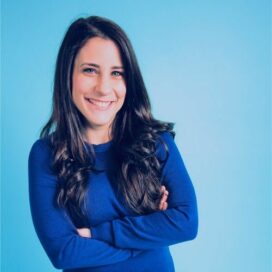
Melanie Basile: “What I’m really focusing on right now is ensuring that we have the right content at the right stage in that patient’s journey… [The Smilist] engaged with this whole social listening project last year, which is really cool, really insightful, to understand like out there, what are the key drivers? What is motivating patients in the dental category? What are the motivators? What are the decision drivers? What are the fears? What are the concerns? Then how do we adapt our voice and our brand and our content to be authentic across every single channel, right? That’s a big focus for us this year that, we’re really excited about.”
Episode Overview
This episode of Ignite podcast features a lively discussion between Alex Membrillo, CEO of Cardinal, and Melanie Basile, Chief Growth Officer at The Smilist. They delve into the exciting realm of marketing strategies and technological advancements within the dental industry. With a focus on enhancing patient experience and utilizing AI to understand patient needs, they explore how DSO marketers have been pioneers in adopting advanced marketing techniques.
Melanie shares her journey into DSO marketing, highlighting the transition from her background in digital marketing at companies like L’Oreal and the unique challenges and rewards of working in healthcare marketing. The conversation explores the significance of the entire dental team in ensuring patient satisfaction and the strategic integration of the “Smilist” brand across acquired practices while preserving their unique qualities. Our hosts also touch on the potential of AI to revolutionize healthcare marketing by providing insights into patient preferences and optimizing marketing efforts.
As Melanie and Alex navigate topics ranging from online booking systems to the implementation of AI-driven technologies, they share valuable insights for marketers aiming to navigate the dynamic landscape of healthcare marketing.
Announcer: Welcome to the Ignite Podcast, the only healthcare marketing podcast that digs into the digital strategies and tactics that help you accelerate growth. Each week, Cardinal’s experts explore innovative ways to build your digital presence and attract more patients. Buckle up for another episode of Ignite.
Alex Membrillo: We’re going to have a blast today. We’re going to talk about BSI market, resort, pub, and have you.
Melanie Basile: Hi, Alex. Thanks for having me.
Alex: Melanie, I love talking to DSO marketers because it was one of the first parts of healthcare to get. Obviously, it got consolidated before anybody else, but because it’s a retail focus, it’s the most advanced marketing of any part of healthcare. I love talking to DSO marketers. You guys are always ahead of the game. I’ve tested the newest technologies, tip, tricks, strategy. These are always very invigorating discussions. Melanie, tell them how you got into DSA marketing. Give everybody, we’ve got three to seven listeners listening to this right now. Tell them how you ended up in DSO marketing.
Melanie: Thanks for having me. I’m really excited to be here. I love Cardinal and I love working with you guys. I’m going to try my best to match your energy. Yes, I’ve been at the smilest in doing DSO marketing for about eight years. It’s been incredible, but this is my first job or career move in healthcare. I’ve always been in digital marketing. I love digital marketing. It’s been my entire career. Prior to coming to the smiley list, I was at L’Oreal and doing digital marketing there, which was a lot of fun. Beauty industry and before beauty, it was consumer electronics, working on an e-commerce store, doing a lot of email marketing. Digital has always been really central to what I’ve been doing.
Alex: I always say the marketers that can do e-com can do Lugen, the Lugen marketers cannot necessarily do e-com. Lugen always will create e-com marketing because all of a sudden, basically like every dollar spent matters and it’s attributable. Y’all care about more time. All right, real quick, honest answer. As the three consumer implies, beauty, and now beauty, but DSO, which has been your favorite? This, we won’t send it to the bosses. Don’t worry.
Melanie: Honest answer is actually DSO. I will say, it is because I really feel like what I’m doing, even though it’s marketing, I get to have an impact on people’s lives. I’m not a healthcare provider, but I feel like there’s a higher purpose to helping people find great providers or helping patients find great providers. For that, I would say this is my favorite, but the perks in beauty are a lot of fun.
Alex: Yes, now it’s either white and clean, but our face is aging quick. Dairy store, not a surprise. How many locations, a general dairy store do we have all the rest of the funds? Give us a little background for framing it up for the listeners.
Melanie: Yes, so we’ve been around for 10 years. We just celebrated our 10 year anniversary and we have over 60 locations, pushing 70 right now. We’re in five states, in the Northeast, and general and really multi-specialty practices.
Alex: Okay, all right, good. That helps frame things up. Melody, what part of marketing, so you love all things digital and connecting patients with kids. Do you also have kids as well? Is it adults only?
Melanie: It’s really adults. We have very little kids.
Alex: Okay, I went to the dentist last week for a feeling that I don’t really think I need it. Dude, they barely know me. I think the dentist had just graduated. It was a DSL. I won’t call him out, but there was a big difference in connecting patients with great care and just the right now care. Yes, it is mission-driven. I’m glad you’re mission-driven. Are we, very fun. Marketing, what do you love about digital marketing? How do you bring it? How do you think through it? Where did you start? You’ve been there, what? You said eight years at The Smile List? Yes. What was the foundation and then where did you expand out? Everybody looks at like, what’s most important to you? Then where’d you go from there?
Melanie: Eight years ago, it was really setting the foundation for digital marketing. I think when I got here, there really wasn’t any digital really being done. They were relying very heavily on postcards and direct mail. One of the first things I did was really set up PPC campaigns and work on optimizing the website and thinking about, user experience. I feel like that was really the foundation, right? A great website, locally optimized, but optimized for keywords and, everything. Really comprehensive. Thinking about UI, which is really big in e-commerce. Then how do you attract, convert, retain? That was the foundation.
Alex: I like that. The whole patient journey. It’s interesting. You don’t just think about the PPC and SEO stuff. You had to stand up. You’re also thinking about like, we drive the clicks, we pay for the clicks. SEO took forever. Now what are we going to do? When you’re looking at user interface, you guys have online appointments. It says, reserve your appointment. That’s going out. What is the app? What is happening? What does it take in me?
Melanie: We use Next Health for online appointments. It’s, real-time booking, real-time availability is shown. That’s like a must-have, right? Yes. Not every office, not every doctor and team wants to go on that, but it’s really a must-have from my perspective. If we’re spending money online, we need to have online booking set up. That’s how people want to schedule appointments. They don’t want to call. Some do. That’s really important too, but we need both.
Alex: Let’s say that’s all Northeast. You find yourself in rural communities or in the cities?
Melanie: Very limited rural.
Alex: maybe so. Online booking definitely is going to have more of an uptake. That’s awesome. You’d be surprised. It seems like a permission to play thing, having online booking, but a lot of groups don’t. The rest of health outside of dental definitely doesn’t. They’re, yes, always trying to catch up to dental. Okay, so online booking. What else do you look at in the user interface when you’re looking at awesome experience online, making sure they can book appointments and more, but what else?
Melanie: What we are really focusing on right now is ensuring that we have the right content at the right stage in that patient’s journey. That’s really a focus for this year. We engaged with this whole social listening project last year, which is really cool, really insightful, to understand like out there, what are the key drivers? What is motivating patients in the dental category, right? What are the motivators? What are the decision drivers? What are the fears? What are the concerns? Then how do we adapt our voice and our brand and our content to be, authentic and be an authority across every single channel, right? It’s not just one. To provide that educational content at the right stage for that patient journey. That’s a big focus for us this year that, we’re really excited about.
Alex: What made you want to do that?
Melanie: I think that we all have thoughts on what is important and what our patients want, right, and who our patients are, but you don’t know if you don’t know, right? You need the supporting data, even though a lot of it was what we thought, but there were some really surprising insights.
Alex: Can you give us a non-secret secret clue?
Melanie: Yes, sure. this is going to sound somewhat basic, the dentist is the MVP, right? When you’re thinking about patient experience and what patients want, it’s about the whole team. That whole team in the dental office, from the person answering the phone, to smiling when the patient walks in the door, to the dental assistant, to the hygienist. It is the whole team that is going to help a new patient become a patient of the practice. I think that from our perspective, or from my perspective, that was pretty insightful, thinking about, it’s not just about finding the right doctor, it’s about finding the right team.
Alex: I love that, and it also gives you the ammunition to go to the front office, see the whole, all of the teams at location say, guys, it’s not just us saying, we need to be positive and have a seamless experience. This is the brand audit, and the focus groups are all saying this. If we don’t accomplish it, someone else will. That’s interesting, and oftentimes these, brand and focus group audits, they tell you what you already know, but it’s someone else telling you to cement it, and then you have, a go-forward thing. Okay, great, I love that. Was it region-based? The audit, was it focused? That actually, how did lab results happen? I love this. This is where, the patient journey’s changing so much. I want to know everything about this.
Melanie: It was more national. there were some regional aspects when it was, the competitive analysis, but it really looked at the category of dentistry as a whole, and it was looking at, social data out there. I think, it was AI-driven, like the conversational AI. It analyzed, over, 1.5 million conversations out there with people talking about their dental experience and what they’re looking for.
Alex: Yes. Yay. I’m thinking about doing a live stream in the next 60 days all about AI and healthcare marketing in a compliant way. that’s a great use case. Our teams are using that now. It is so crazy because our teams are using it to do the focus group messaging and audits. Anyway, so what? It goes and gets at everything, and it says, hey, listen, this is where dental patients go about. This is how the experience they want. Then, Melanie, what are you going to do with that now? Now a couple key points. Is it going to change how you advertise? Is it going to change the in-office marketing, the referral marketing? What changes?
Melanie: I think the creative, the messaging, the content, it’ll just better align us with what patients want. What outcomes are they looking for? What are their fears? What are their concerns? Then we present our brand in that way. Not to say that we weren’t already doing it, but a better alignment.
Alex: Yes, I love that. You only have one brand at House of Brands. It’s one brand, right? Everything is Smiley’s?
Melanie: It’s one brand, yes. When we affiliate with a practice, we really do care about our brand and standing behind our name. We do rebrand.
Alex: That’s good. Is it like a [unintelligible 00:10:02] every time, every twelve months it becomes powered by Smilist and then Smilist a year from now [unintelligible 00:10:07]? I love it.
Melanie: There’s no cookie-cutter approach where you sign and then the Smilist brand goes up. We try to introduce it over time, preferably everything that’s special in the former brand and practice but introduces Smilist because [unintelligible 00:10:24] –
Alex: It has worked well. It has worked great. I think the M&A team struggledbecause Doctor Zhang wants to keep the brand and the local flavor and so they just say, “Yes, you can retain.” It’s a good M&A strategy, but man, his marketing such [unintelligible 00:10:37] we’re good at it, but so much more learned.
Melanie: We have geographic density. What we tell that doctor is that you’re going to get more under the Smilist brand because we have brand recognition, we’re known in our area, it’s going to help you in the long run.
Alex: That’s smart. That’s a smart play. They require everything in a town because– Yes, I think [unintelligible 00:10:57] and I have done that in Florida. That’s smart, smart. Let’s talk technology a little bit. With the HIPAA, over the last year and a half, all of the compliance stuff has gone crazy. What are some of the changes you had to make? You are a scaled-out-group. Big issue, big problem, big opportunity. What has changed for the Smilist?
Melanie: We have actually really made this a focus. We have relied really heavily on the Cardinal team to help us implement these solutions. You guys have been great and I think it’s been a lot on the tracking side. Implementing platforms to replace things like GA, that was key, and just getting our ducks in a row there.
Alex: Still finding a way to funnel great bookings and leads back into the platforms which has been a big struggle, but having next up super, super valuable there. Melanie, anything that comes to mind that didn’t work? I know Cardinal went through paid media, so it ain’t going to offend me. I think it’s important to talk about stuff that doesn’t work because it does for other groups for other reasons, but it sometimes can’t work for some. Anything that you can think of over the last year that didn’t pan out well?
Melanie: We did a test for local service ads before a handful of our offices and that didn’t work so great. Which is okay because that’s how you learn, by testing and trying new things. We really struggled to get any conversions. It got us leads, the local service ads, but we weren’t able to convert them. That was something that didn’t really pan out. We were really excited about it.
Alex: Two things that are awesome there. One, shame on Cardinal. We’ve seen it [unintelligible 00:12:36] and I think it’s region-based, so that’s not [unintelligible 00:12:39]. It’s very clear that they leads but not conversions. Guys, if you learn anything form this 20, 30 minutes we’re going to spend with Melanie it’s you got to understand what’s converting and Melanie got enough of the technology and systems and online booking to know the leads are not converting into conversions. Very importantly, leads are almost becoming a vanity metric. Anyway, how did you know? Is it a specific type of patient? What was yielding lots of bad bookings?
Melanie: It was patients whose insurance we were not in network with. They’re tracked, so we reviewed the calls, we listened to them and that’s how we knew.
Alex: Awful. Very cool. Flip it [unintelligible 00:13:20] for the stuff that doesn’t work. Melanie, you got 18 people on your team running 70 location DSO? How are you doing it?
Melanie: Thanks. Yes, 18. [laughs] We are a very small but mighty team. I have two-
Alex: Two full-timers?
Melanie: -two marketing superstars, yes. Heather and Bobby. It’s Heather, Bobby, and myself, and we are the marketing team for years.
Alex: Everybody wants to know how do you scale out a group? That’s why I always like to talk about team structure. What do Heather and Bobby have ownership over?
Melanie: Bobby handles a lot of the graphic design and the execution of our marketing campaigns. Heather’s our marketing manager, and she is responsible for more oversight and execution. I think it’s really important when you’re trying to build out a team. You don’t actually look for a copy of yourself, you have to find people that complement your skills. Hire for culture and the values of the organization. Thankfully, that is totally what I have in them.
Alex: How you perpetuate and higher compliments like, “Do you know digital so well?” You couldn’t even know that one because it’s such an important part of being a Smilist. Well, but you know it so well. I would ever comentate on people that know something totally different and almost get the agency or contractors to do. Is that the thesis?
Melanie: Yes, that is exactly the approach that I took. My entire career has been in digital and not healthcare, my previous experience. Heather has some digital experience, but she has a lot of healthcare experience and is more marketing communications relationship-driven. She’s amazing at face-to-face people interactions and building that relationship. Again, the culture piece is really important because our marketing team is here to support the offices, support the doctors, support the ops team. I can’t say enough about hiring for the right culture.
Alex: Yes, [unintelligible 00:15:17] side in support of all the affiliate. Do you all call your doctors affiliates? What do you call– No, because they’re rebranded as Smilist, so no, not the affiliates. Awesome, so you found the [unintelligible 00:15:26] with those two. That’s great. What are we excited about this year? You’ve gotten through the initial hurdles of the HIPAA compliance and getting tagging, tracking and all that stuff. You’ve got your signals being pointed in, and you know what leads are becoming conversions. You got online booking, so we’re excited about the patient journey and the experience because you’ve done the research. That’s the focus for this year.
Anything else you’d like to tell the listeners to look out for in the dental space or otherwise in healthcare marketing? AI, any trends why you’re using it? Anything else you’re really excited about?
Melanie: I use Chat GPT to write these answers. Chat GPT said AI. I almost got you to do a spit-take.
Alex: You almost got me. Dude, Chat GPT has a certain size in your [unintelligible 00:16:09] Of course, it would recommend itself.
Melanie: Seriously, I think AI is obviously the trend that we all have to watch. We recently switched over to a new call system.
Alex: What are you using now?
Melanie: Pure Logic.
Alex: Pure Logic. Good. Everybody likes to know what everybody’s using. You’re excited because they’ve got an AI listening system or something in there?
Melanie: Yes, precisely.
Alex: It’s interesting, Melanie, you and I weren’t alive for the invention of the Internet and now all of a sudden, we get to live through, what is the next Internet. It’s scratching the surface. You can tell it’s useless most of the time, and that there’s something there and it can be utilized as an extension of ourselves. The more I’m learning, it’s like Chat GPT is one of a million of these things. The more I talk to my team I’m like, “Gosh, you need to start using this more because it’s so important to our clients and we get variations and we expand our abilities and it’s so innovative and it helps make so much more [unintelligible 00:17:03]
They’re like, “Yes, Alex, we are, and these are all the use cases we use it [unintelligible 00:17:06] I’m like, “You didn’t tell me.” I’m with you, it’s going to change a lot. For self-education, know any? This is a question I often get to. How do you stay up on trends? You hire an agency. It’s a decent one, I hear. I guess they get to bring the stuff from the other clients that they hear about, but how else do you stay on trend and get ahead of things for your industry?
Melanie: I think it’s just really important to find the industry leaders and groups out there, whether it’s Becker’s Dental Review. There’s a lot of them. It all depends on what industry you’re in and attend those events. Stay connected through your peers and your colleagues. It’s also really important to look at other industries. I think that’s why I like taking my past life and applying it to dental. It is retail facing and [unintelligible 00:17:59] a patient experience, but why does that have to be different than a customer experience in some ways? You just got to find for yourself what is out there and stay in touch with it.
Alex: [unintelligible 00:18:11]. If I heard anything that it’s like, don’t just attend the health care DSO marketing conferences and connections. You can learn a lot from the e-Com marketers, from the consumer product marketers. In fact, they’re ahead of us, generally. In healthcare, [unintelligible 00:18:25] quick and we’re doing innovative. We have a lot of regulatory issues that we have to contend with that no one else does. There’s still lots of innovative advertising and they use the most modern DSPs and tracking and stuff like that.
[unintelligible 00:18:36] connect with peers that are not just in healthcare marketing and go to the events that are not just some healthcare marketing. We learned about a way to start. We can look at first, how to expand out from there? How to get [unintelligible 00:18:48] brand messaging and insights done at still through the wizardry of AI. We have to learn how to get signals. We learn about different tracking technologies. Melanie, can anyone reach out if you want them to find you on LinkedIn? Is that okay if people have questions?
Melanie: Absolutely, yes.
Announcer: Thanks for listening to this episode of Ignite. Interested in keeping up with the latest trends in healthcare marketing? Subscribe to our podcast and leave a rating and review. For more healthcare marketing tips, visit our blog at cardinaldigitalmarketing.com.
Healthcare Marketing Insights At Your Fingertips
Listen and subscribe to Ignite wherever you get your podcasts.