

Episode Highlights:
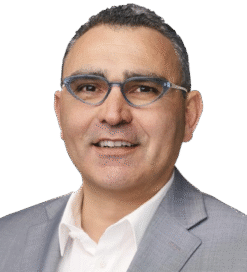
Douwe Bergsma, Chief Brand & Growth Officer at Piedmont Healthcare: “But in a world where you don’t have clear goals, and you’re not data-driven, opinions win.”
Episode overview
What does it take to make healthcare marketing accountable for patient growth, not just campaign performance?
In this episode of the Ignite Healthcare Marketing Podcast, Lauren Leone, President at Cardinal Digital Marketing, sits down with Douwe Bergsma, Chief Brand & Growth Officer at Piedmont Healthcare, to explore how marketing evolved from a tactical function into a strategic driver of growth. Douwe shares how Piedmont aligned marketing with system-wide priorities, made the team accountable for patient volume and brand health, and built a measurement framework to guide investment decisions and improve patient experience.
You’ll learn
- How Piedmont shifted marketing accountability from activity metrics to patient visits and appointments
- Why physician outreach and PR emerged as some of Piedmont’s highest-ROI activities
- What it took to build healthcare-specific marketing mix modeling
- How to balance brand building, patient acquisition, and patient experience to support growth
If you’re looking to prove marketing’s business impact and earn greater influence in strategic decisions, hear how Piedmont approached the challenge.
Announcer: Welcome to the Ignite Podcast, the only healthcare marketing podcast that digs into the digital strategies and tactics that help you accelerate growth. Each week, Cardinals experts explore innovative ways to build your digital presence and attract more patients. Buckle up for another episode of Ignite.
Lauren Leone: Hello, everybody. Welcome to Ignite Healthcare Marketing Podcast. Super excited to be doing this one in real life. Usually, we’re behind a screen. I’m here with Douwe Bergsma. He is the chief brand growth officer of Piedmont Health. Douwe, thanks for being here in Atlanta, live in the studio.
Douwe: Thanks for having me. It’s cool to do it in person.
Lauren: I know. I promised you the fireplace and the setup, and here we are. Douwe, I’m super excited to chat with you. We were talking a little bit before we started recording, and I said, “Let’s hold off. I want to get that live on the camera.” You have a unique challenge. You’ve been with Piedmont for six years of balancing brand growth, patient experience, and you have this immediate need to drive new patients as well. You’ve got a lot to balance. Tell me a little bit about your journey from outside of healthcare in industries and companies like P&G and Georgia-Pacific, and entering healthcare and what you saw, what was different about the landscape, and how was that transition for you?
Douwe: All the way back, my mom was a nurse, and my dad was working in the hospital as a buzz boy, and that’s how they met. That was my experience with healthcare before I was born. Born and raised in the Netherlands, went to business school, started at Procter & Gamble in the Netherlands. After a few years, they asked me to move to the US, so I did. I worked in the US at Procter & Gamble’s office in Atlanta, then in Cincinnati at headquarters for several years, did a bunch of brands, started shopper marketing for the company. My last assignment was Pringles for North and South America.
Then I was recruited to Georgia-Pacific here in Atlanta as their chief marketing officer, so did that for nine years across a range of different brands. The main theme was moving the brands into the digital age, as well as e-commerce on the one hand, and building strong purpose-driven brands on the other hand. Then, six years ago, I started at Piedmont, which was my real first experience in healthcare, other than my mom being a nurse way back when. I literally use that in my interviews, like, “What is your link to healthcare, other than my mom being a nurse back in the 60s? Started the journey at Piedmont, was there for four whole weeks, and then the world came Douwen with COVID.
Lauren: Good timing.
Douwe: That was great timing.
Lauren: Other than the whole world shifting, what did you notice coming into healthcare for the first time? You had spent all this time bringing brands into the digital world, and healthcare tends to lag behind that a little bit. What did you see?
Douwe: A few things. First and foremost is, I think in healthcare, the communications functions is ahead of most industries. That was a pleasant surprise. Still today, our PR, internal communications, as well as our community affairs, are a well-established part of the healthcare positioning and the healthcare role in society. That was a pleasant surprise. Big department doing really well, continuing to do well, and especially during COVID, that department, internally and externally, became extremely important. That was a real positive. The other thing I noticed is that the patient experience is very important. Obviously, I did not work in the service industry before.
I did mostly consumer brands that you buy in a grocery store or Walmart or Target or Costco. I learned quickly that experience and the orchestration of the experience is really important, but it’s also a massive challenge in healthcare, even if you compare it to hotels or airlines or financial advisors. The last one, which is the field I was most familiar with, is marketing. There, I literally noticed that, culturally, as functionally, marketing had a lot of upside opportunity. Culturally, it was because marketing was not viewed as part of the decision and the strategy process. It was more viewed as a part of making it happen.
Later in the whole decision process, the metrics were not really key to the enterprise as a whole. Those were a few things that I observed. At Procter & Gamble, marketing, together with R&D, leads the organization. At Georgia-Pacific, marketing, together with sales and manufacturing, are among the leading functions. At Piedmont, not only set the table, we’re not even at the table. That was a big mind shift. It’s like, “Why am I not in this meeting?” They’re like, “You’re marketing. We’ll let you know when we need a billboard.” That was my first two weeks. You let me know when we need a billboard, and that’s my run.
Lauren: I don’t get to decide that.
Douwe: They’re like, “Online booking is also important.” It’s like, “I need to have a conversation with some of the leaders.” What do you expect of the function that I’m now overseeing?
Lauren: You came in. There was a 10-year plan in place. You came in. It was already underway. Tell me about that.
Douwe: In 2016, way before I joined, our CEO and the leadership team started with the plan on the page. It was the 2016 to 2026 plan. It was just–
Lauren: Here we are. Can’t wait to hear about it.
Douwe: They started it. I joined in 2020, so four years later. The plan had all of the strategic priorities in place. They were pursuing those strategic priorities with the right strategies. The system was already successful in pursuing those and accomplishing the objectives. That made it easier for us, the team, and myself to understand how can communications, marketing, patient experience, insights analytics, physician outreach, how can we better align ourselves to those priorities and those objectives and stop doing the things–
Lauren: Good to have a goal, right? A vision.
Douwe: That was pretty good to have a system goal and system strategies that then trickle Douwen across all of the entities in our physician enterprise. Then for us, it’s like, how can marketing play a bigger, better, faster, more cost-efficient role in all of that?
Lauren: In order to get and earn that seat at the table, oftentimes it’s being able to track and measure and contribute to the broader measurement story. I know you did a lot of work on measurement and identifying the right KPIs. Can you talk to me a little bit about that journey?
Douwe: Yes, you listened to my presentation last year. That’s great. The biggest effort initially was getting alignment on the measurements, on the goals, and the metrics. Once you have that, it is so much easier to align your internal organization as well as your external partners and get alignment across your key stakeholders. It is way easier to sit Douwen with our physician enterprise, where we have hundreds and thousands of our physicians, to say, “We are here to help you drive offices.” Rather than saying, ” Hey, we are marketing; we make sure we position you right in the market and we have great creativity or we have a great website.”
That took some time to align because, culturally, people were not used to marketing having clear goals and metrics that were directly connected to the overall system goals and objectives. For example, when I came in, budget management was a key metric. Percentage of appointments booked online was another metric, and with a few other adoption metrics, but we changed it. The biggest one was making sure we were directly linked and responsible, as well as accountable, for volume, so office visits, appointments. That was one. The other one is brand strength, brand health. We did not have brand health metrics in place, things like awareness, favorability, reputation.
We installed that, which changed everything. Once you are looking at how we’re going to build a brand, that then drives to conversion. Then later, they added the patient experience to my responsibilities and saying, “How do we then also follow that up with an experience, which links to whatever we promised that we would do?”
Lauren: The metrics, once you had them, what did it change? What did you do? What were some of the biggest shifts that you think had to happen once you had that alignment?
Douwe: Once you have clear goals, it becomes better to set the strategies. Strategies, in general, it is one thing to determine what you are going to do. It’s a whole other thing when you determine what you’re no longer going to do. I would say both were difficult. First of all, what are we going to do? When I was at Piedmont, the first year and the first two years were mostly COVID-driven, so it was obviously a shift in priorities. At the same time, it created time for us to figure out what the brand should stand for. There was no urgency to go, ” Here’s how we position Piedmont,” because we’re basically talking about-
Lauren: It’s giving all volume.
Lauren: -“Get vaccinated, wash your hands, keep your distance, hear the symptoms, this is how you test.” Once that was more under control, two things happened. One is Piedmont started expanding. When I joined, we had 11 hospitals. Today, we have 28. We’re now a $9 billion organization. Back then, we were less than $4 billion. Then, when the plan on the page started back in 2016, I think they were a little below $2 billion. We had a massive growth. We dealt with COVID. We had this massive growth, expanding our hospitals and our physician enterprise. Then, like everybody else, we had a massive recruiting and retention challenge.
All of these things came together, making it necessary that we had a stronger brand position. Not only in Atlanta, where we’ve been for over 100 years, but also in the city of Augusta that we’ve just entered two months ago. From a recruiting perspective, they say, “Hey, we need to be a brand that patients choose for their care, but also people choose for their employment.” That started it all. Those metrics helped with all of that to say, “Hey, that’s what we’re going to do. We’re no longer going to do that.”
Lauren: You’ve got your core markets here in Atlanta, where the brand proceeds and you’ve got great equity there, how do your strategies differ here than in, say, Augusta when you’re entering a new market?
Douwe: Actually, they don’t. One of the observations, back to your first question, was that a proctor I used to run Pringles, which was available in 180 countries. We had one, maybe two ads around the world. The one thing is, we translated them. If we aired them in Japan or China or Uzbekistan or Israel or America, in my time there, we developed two or three campaigns that visually were equal, the music was almost equal, and some of the tactics were different, and the language was different, but it worked. Then you come to healthcare, and you have somebody in, let’s say, Columbus or Augusta say, “We’re different from Atlanta. We don’t do this here.” I used to run a brand around the planet.
Lauren: I’d do the same thing.
Douwe: The strategies and the goals were more consistent and more coherent than one state of Georgia. People are saying, “What we do in Athens needs to be significantly different from what we do in Atlanta or Augusta.” I don’t think that’s true. In a world where you don’t have clear goals and you’re not data-driven, opinions win. It was for us, let’s get the goals clear, then have the data and then say, “Hey, what does the data say? What do patients tell us, not what do we believe?” That was hard because all of a sudden you start talking about, we need less sponsorships because they’re not as effective as paid social.
We need less billboards because they’re not as effective as display. That was hard because for people that have been in healthcare for a long time, and all of a sudden it says, “We don’t need our name on that stadium. We don’t need all these billboards.-
Lauren: I’m driving around; I don’t see this.
Douwe: -We definitely don’t need to be at the Taste of Alpharetta.” You start doing all these tactical things that they’re used to and sometimes they know the people that are involved. It’s like we need to have a clear separation of those things that we do to better engage with the local community, which we call community fairs, versus those things that drive brand health for the long-term versus those things that drive conversion. The data helped a lot there.
Lauren: Data helps you know the right level of each of those things. Speaking of that, not everything is as measurable as digital. How do you strike that balance? What type of measurement frameworks did you cycle through? Did you test? Maybe not where you landed because I know that’s probably a long journey and proprietary, but tell me about the different types of measurements that you consider because it’s not one-size-fits-all.
Douwe: Basically, if you look at how we approach brand growth, it’s three main buckets. One is brand building, where you build brand preference and awareness for the long term, which is well-established metrics and measurement companies across the board. We use the same kind of companies that Procter & Gamble or a George-Pacific would use to understand how many people know us, how many people like us, how many people love us, and healthcare trusts us. That was the most straightforward part. Then for what we call marketing activation or performance marketing, as you guys call it, we had measures in place, but those measures were more channel-by-channel and less cross-channel.
It took about two to three years to build a healthcare Piedmont-specific marketing mix modeling. We call it brand growth modeling because it’s more than marketing. That was a long journey.
Lauren: I’m glad to hear you say that because I think people think it’s a quick solution. Like, “I’ll just stand up an MMM, and it’ll answer all my problems.”
Douwe: I’m sure there’s cheap and fast stuff, and there’s quality stuff. It’s not always the same. I can get my healthcare information on Google or I can talk to a real doctor. They both sound the same, but it’s very different. Same is true for MMM. We chose the quality route. When you choose the quality route, compliance is the most important. How do we do everything that’s compliant with all laws, like HIPAA, Privacy protection, cybersecurity? Getting the compliance straightened out through cybersecurity, through our financial department, having faith that the data is treated in a compliant way, is protected, and then what we’re going to do with it, that was actually half of the work.
Explaining marketing mix modeling to a finance department that’s never seen marketing mix modeling, or a compliance department, or a legal department, “What is that? Why would you do it? Why is nobody else in healthcare doing what we should do? We do it because we’re better than everybody else in healthcare. We did that. Through that, we added marketing mix modeling for short-term conversion. Now, many companies, in or outside of healthcare, use marketing mix modeling also for the brand building. We don’t really do that. We look at the brand-building efforts and say, “How does it drive long-term brand health?”
Then we use marketing mix modeling to say, “How does it drive conversion?” Our mix modeling would say, ” Hey, your TV doesn’t have the highest ROI.”
Lauren: I know that. It’s serving a different purpose.
Douwe: It’s not designed to do that. It’s very different from what I did at Procter. We did look at TV as a big ROI driver. In CPG, it is. In healthcare, it was just not necessarily the case. That’s the second set of metrics. We look at the channel-by-channel metrics, and then we look at the MMM across. One of the big ahas we had there, which was a big aha for me coming from the outside, is that two of the highest ROIs was physician outreach, which would translate to sales in other industries. Then secondly, it was communications PR. That was because of the high amount of impressions we drive for PR, which is unheard of if you look at any other industry.
Nobody wants to hear a barista talk about coffee twice a week.
Lauren: I do.
Douwe: I do too. Trust me, people want to hear doctors three to four times a week about any topic. It’s like, “Hey, flu season is coming. Hey, this celebrity has cancer. What’s going on?” The amount of healthcare information people are seeking for earned channels is so large that it really became a driver for us on top of the marketing efforts. That’s on the second. Then the third bucket is the patient experience. There, it’s a little bit harder because in order to have strong correlations and causality between an effort and an outcome, there needs to be variability.
If everybody uses EMR all the time, or everybody uses online booking or people are constantly on your website, it’s very hard to say, “Hey, these website visits drove these office visits or this EMR engagement drove.” We change that to satisfaction with the experience as well as adoption of the tools. We do know internally that the adoption of the tools and the satisfaction with the experience has a strong correlation causality to some of the other metrics that then lead to the overall results. That took about a year to figure that one out, by the way. It took about two to three years to do the marketing activation measurements. On the patient experience metrics, it took about a year and a half before we landed.
Lauren: Douwe, not everything is perfectly measurable. What are some areas that you cannot measure but you know are still important for Piedmont’s growth?
Douwe: The number one area that is the hardest to measure is internal communications, but it’s unquestionably important.
Lauren: You knew it coming in. You said this is the most critical, well-performing function.
Douwe: Internal communications, as well as external communication and PR, were performing really well, very strong departments. There was room for optimization, but it was more an evolution than a revolution. Marketing and patient experience were a revolution. Communications are evolution. The leaders that were there when I joined are still there. The other functions is completely overall. Probably 80% or 90% of the folks started in the last two years.
In communications, it’s pretty stable because that was a really strong function. Now, external communications, we added measurements because, to our surprise, as I said earlier, we could measure the effectiveness of PR related to long-term brand building, which we expected, but also to short-term offices, which we didn’t expect. Internal communications is very hard. You can measure employee satisfaction with the tools. You can measure the adoption of the tools, but very hard to measure– You want to know what the effect of internal communications is, for example, on employee retention.
Lauren: Which directly that affects patient satisfaction.
Douwe: There are a thousand other things. You can have the best internal website and the best newsletters and the best events. It only takes one less-performing boss to make people leave. You can’t hold the internal communications department accountable for employee retention in the hospitals, which is by far our largest employee base. We limited our measurements to adoption of the tools as well as satisfaction with the tools, assuming that enhances the employee experience. That’s a hard one. HR and IT are our biggest partners as well as management.
Not a lot of people challenge the value and the investments in that area because everybody knows you have to really engage your employees at the right time, at the right place, with the right tools. That was a hard one. Everyone knows we tried hard to find measurements.
Lauren: You tried to find it.
Douwe: We sit in those meetings, and you have all of the leaders there and the internal communication folks like, “What about our metrics and what about our ROI?”
Lauren: We trust you. We’re just going to let it. [crosstalk] We’re going to keep it. Douwe, you’re in the final year of the 10-year plan and probably looking to build the next 10-year plan. What, as that comes to a conclusion, are some of the biggest pieces that you’ll carry forward and consider for the next 10 years?
Douwe: Great question. First of all, a few weeks ago, we had our annual meeting with Directors Plus. That’s all the directors and up in our organization. We had 500 to 600 people come together where our CEO closed out the 10-year plan. It was one big success fest. It’s amazing. I’d love to take some of the credit, but it’s amazing what Piedmont has accomplished and what Piedmont is delivering for the state of Georgia and now beyond. We serve 4.5 million patients in any given year. We’re close to about 90% of Georgians.
We have 28 hospitals, over 3,500 physicians. It’s every metric that they set out in 2016, it was met or exceeded, whether it’s the quality and safety metrics, the service metrics, the growth metrics, the talent metrics, or the stewardship metrics. The stewardship basically makes sure that you can do all of those other things from a financial perspective. It was a big celebration of how we accomplished. Unlike any company I’ve ever worked for, the 10-year plan didn’t change one word over 10 years.
Lauren: Stuck with it from the beginning.
Douwe: It was literally– Our CEO basically gave us all a crystal plaque with the original plan I’ve basically engraved on it, so I proudly have it on my desk. All the leaders got one to say, “Hey, this is what we set out 10 years ago, and this is what we have accomplished.” Then we launched the 2036 plan. Many of the things are similar because if it ain’t broken, don’t fix it. We’ve been extremely successful. We are ranked among the best-performing healthcare systems in the United States right now, and by far in the Southeast.
We’re continuing on that path with a high priority to continue to drive the best quality and safety for our patients, to have the best access, the best availability by growing our footprint, whether it’s more locations or more service lines or more off the existing service lines. Obviously, we’re the number one employer of Georgians in Georgia with over 50,000 employees.
Lauren: That’s a lot. There’s some big companies here.
Douwe: There’s some big companies, and they have more employees, but not based in Georgia. Home Depot has more employees, but they’re not all in Georgia. We are the largest Georgia-based employer of Georgians. That comes with a lot of effort to make sure you attract talent, and then you retain them, and you develop them. Do that in a way that we sustain our stewardship and our financial discipline so that we can continue to invest back in the communities with the highest quality care, with the highest level of access. Going forward, I would say the last few years, there was a lot of focus on dealing with the coronavirus, obviously, but also with the acquisitions and talent acquisition.
Going forward, I think we will continue to focus on quality safety, but also more on the service part. As you grow, it doesn’t mean that the growth automatically comes with a higher level of access, and especially a higher level of seamless patient experiences, different service lines, and the different locations. It becomes a complicated matrix. In our case, about a third of the physicians are employed, but two-thirds are not employed. You have this: employed, non-employed. You have primary care, retail care, specialty care. You have hospitals. We have rehab. We have mental health, all of these different things.
Then you have people that are really embracing the digital experience and people that still want to come in person and make an appointment or call on the phone. You have to integrate all of that in one seamless experience. If you need one service line, it’s not that hard. If you just need primary care or OBGYN, if you have a complicated service and healthcare needs, it becomes very more complicated to orchestrate it all because then you need radiation or you need chemo or you need lab results. You need to see your doctor. You need to have a surgeon. All of that.
Lauren: A lot of people working together.
Douwe: All of a sudden, the seamless coordination becomes more and more important. That’s where, as a system, we will continue to focus more and more on.
Lauren: You talked a little bit when we were chatting earlier about the use of AI in helping to make that happen. How do you see that playing into the 10-year plan, the 2036 plan?
Douwe: AI is an interesting one, obviously. I think AI will come with a lot of upside, I promise. I’m guessing that healthcare will probably be the slowest to adopt AI for obvious reasons, but also will probably have the biggest benefits in the end of the day where other industries are strengthening [crosstalk]. We’re doing a marathon, but at the end of the day, I think healthcare will be one of the industries where AI will have the biggest positive impact for obvious reasons. On the flip end, there’s also concerns that we need to take into account because one of the things that AI does, it shares information with a high level of confidence, and you actually don’t know if it’s true.
It will basically say, “Oh, this is what’s going on.”
Lauren: This is the answer.
Douwe: It’s like, “Is it?” Because no human physician might be involved in what an AI platform will tell you based on the data, and it can steer you in a completely wrong way. The good thing is that every AI platform will have a disclaimer. The bad thing is those disclaimers are small and hidden.
Lauren: People will ignore them.
Douwe: Or people don’t read them or ignore them. All of them admit AI can make mistakes, and almost all of them will say, before you make any decision, see your physician, but it’s so easy not to. Then follow this, like, “Oh, I just have a cough.” Then you’re like, “Maybe it was something really bad. You should have gone to the ER.” Obviously, you have the horror cases that are shared in the media. AI comes with two parts. How do you embrace the positive, and how do you make sure you educate your patients or warn them for the potential negative? I think as a healthcare system, you have responsibility in both.
On the positive side, I think AI will help us to find the best doctors for your specific situation, book an appointment, maybe better understand your physician notes and your lab results. There’s going to be a convenience factor on when you’re searching for information, especially which doctor to see, which hospital to go, which hospital has the shortest wait time in the ER in a 20-mile radius.
Lauren: Get you the best experience.
Douwe: It’s literally a convenience and an education tool in the one end. Then also in the operational side, like booking an appointment, finding the best appointment, those kind of things that’s where AI will help. Then from a marketing perspective, you have all the obvious ones: content creation, customization, personalization, all the good things you [crosstalk] guys do for a living.
Lauren: Making the humans what they can do extend tenfold. Speaking of the marketing humans themselves, everybody who listens to this podcast or follows us on LinkedIn, they want to be you, Douwe. They want to know how you did what you did. You said you brought in most of the team as new within the last two years. Quick tips for people listening on what makes a great healthcare marketer, what you look for in finding the right people and building the right team.
Douwe: I’m not so sure if it was what you stated is true. You sounded like AI. You said it with a high level of confidence, but it might be inaccurate.
Lauren: I’m speaking from just personal.
Douwe: Anybody who wants to be me, find better goals. What we’re looking for. I did share that we have about half of our organization is new for brand growth and in marketing and experience. It’s almost 80%, 90% is new in the last two years. That’s driven by a range of factors. It’s not so that we actually– It was mostly for natural progression.
Lauren: Rather than just factor.
Douwe: We didn’t reorganize a lot of folks out. It was literally, “This is not the place I want to be. Somebody else allows me to work from home, Piedmont doesn’t, somebody pays more, or something is close to the home, or this is no longer the place that I think I’m the best match.” That happens, which then allowed us to find people that are equal or better than the ones we had. To answer your question on what we look for, it differs by function, obviously, if you look at the expertise that we’re looking for. If you look at the things that are common across, in my mind, you have to be very curious. You have to have a change agent mentality.
Above all, you have to be human-centered. Your strategies and your objectives should be driven by what you understand about patients, not what a stakeholder or a neighbor or a spouse shared with you. It literally has to be driven by facts and insights. Those are three very important. Be curious, drive change, and be human-centered, but balance that with a strong understanding of operations and finance. You can’t be a good marketer if you don’t understand finance. You cannot help your partners if you don’t understand the operational complexity they have. I still fail in those areas every now and then. We can’t do that. Like, “Oh, I’m sorry.”
Lauren: Constant reminder.
Douwe: Why can’t you do that at 1,000 locations? It shouldn’t be that hard, right? Then they look at you like, “Really? It’s 1,000 locations times 10 staff members.” [crosstalk] Then it’s now, and every location is different. You have to be rooted in finance and operations, and then make sure you drive change based on human insights. Do that with a high level of curiosity. That’s probably what I’ll be looking for.
Lauren: I like the curiosity piece. That’s always been one of our values here, too. I think those people are the ones that are going to sustain through all the change and how AI adapts what we do. Staying curious we’ll keep them at the forefront of that.
Douwe: There is a cultural element to it that I also want to highlight is before any of these things matter, you as an individual has to make a decision whether you want to be a quitter, a climber, or a camper. Basically, it’s a mountain climbing metaphor. I’m not a mountain climber. An author and a trainer once he gave me this metaphor, and I’ve carried it ever since 2004, if you want to climb, you need to make sure that you commit to that. Too often, you have employees or peers or friends that say, ”Hey, I want to be an executive. I want to be Douwe, chief marketing officer, chief brand growth officer, chief financial officer.”
Basically, they want to climb the corporate ladder. Typically, they want to climb from a level of satisfaction and level of challenge, level of curiosity. Climbing means a lot, and not only compensation-wise, health and well-being play into that as well as wellness, as well. That is a tough choice because when you want to climb, but you’re not willing to make the effort, you basically have the risk that you start camping. You tell yourself you’re climbing, but you’re actually-
Lauren: You are dancing still.
Lauren: -camping, and you’re just sitting still. A lot of the folks need to make that decision, first and foremost, because it comes with trade-offs. Sometimes I have a conversation with somebody like, ”Hey, I’m going to apply for this job. I’m a coordinator. I want to be a manager.” It’s like, “Great. I think you’ll be great in the business.” ‘”Yes, but I’m not going to move to Atlanta, so I can do it from XYZ, right?” “No, not really.” The last time you talked, you basically said your aspiration was to become a CMO or something. Lauren: That’s going to require a lot more than moving to Atlanta.
Douwe: You’re already not willing to move from, let’s say, Columbus to Atlanta or Athens to Atlanta, and you talk to the guy that moved from Europe to the United States and ask me, “What does it take to get there?” I just gave you an answer, and then the first small step is already too much. Now, that’s a choice, but then you also need to accept the consequences of that choice. Some individual said, “You will never be a CMO in this town because there’s no company that even has a CMO in the town.” If they have, there’s probably a thousand others who want it. You need to be realistic about what you aspire to become and what it takes to get there.
A lot of folks need to make that decision, like, “Do I want to be a climber or do I want to be a camper?” There’s nothing wrong with camping, but it’s a different decision for different outcomes.
Lauren: I didn’t know this was going to turn into a life coaching session here, Douwe. I like it.
Douwe: Are you climbing?
Lauren: Definitely. Good, Douwe. It was so great to have you on the podcast. We’ve seen your presentations at HCIC and HMPS and all these different places, and it was great to have you local here in Atlanta with us, and we hope to have you back here soon.
Douwe: It’s pretty cool to have something in our backyard. Soon, everybody at your agency is a people patient, and if not, give me a call. I can help you out.
Lauren: That’s on-the-ground marketing here.
Douwe: Exactly.
Lauren: Thank you, Douwe.
Douwe: Thank you so much. Thanks for inviting me.
Lauren: Great to have you.
Announcer: Thanks for listening to this episode of Ignite. Interested in keeping up with the latest trends in healthcare marketing? Subscribe to our podcast and leave a rating and review. For more healthcare marketing tips, visit our blog at cardinaldigitalmarketing.com.
Healthcare Marketing Insights At Your Fingertips
Listen and subscribe to Ignite wherever you get your podcasts.