


Episode Highlights:
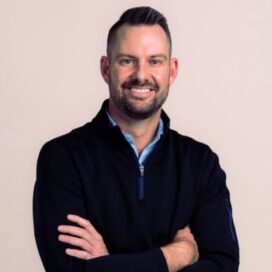
Jeff Mason, CEO, Power Digital Marketing: It’s incredibly important to get the right message to the right patient at the right time, just like any brand. With Cardinal’s mission of connecting patients with the right health care provider, creative extends its responsibility beyond just performance and into representing the health care organization that much better.
Episode overview
Healthcare marketing is entering a new phase: one where patient journeys are more complex, measurement expectations are higher, and confidence in growth depends on more than last-click reporting.
In this episode of the Ignite Healthcare Marketing Podcast, Cardinal Digital Marketing Founder, Alex Membrillo, and Power Digital CEO, Jeff Mason, unpack how patient acquisition has fundamentally changed, and why last-click attribution, single-channel thinking, and tactic-chasing are putting healthcare growth at risk. They also explain why this moment in the industry made it the right time for Cardinal to join Power Digital as its dedicated healthcare division.
As patient journeys become more consumer-driven and CFO scrutiny intensifies, healthcare marketers need more than reports—they need confidence. This conversation breaks down how advanced measurement, faster creative testing, and consumer-grade data infrastructure are becoming essential to scaling patient acquisition responsibly.
You’ll walk away with:
- Why last-click attribution fails as patient journeys span TikTok, search, influencers, and AI
- How Cardinal’s healthcare specialization, combined with Power’s data and measurement capabilities, unlocks smarter investment decisions
- What retail and e-commerce got right, and how healthcare can adapt without compromising trust or compliance
- How better measurement enables better patient experiences, not just cleaner dashboards
If you’re under pressure to prove growth, justify spend, and move beyond what’s “worked before,” this episode lays out what healthcare marketing needs next, and why this partnership makes that evolution possible.
Lauren: All right, everyone, welcome back to Ignite: Healthcare Marketing Podcast. I’m super excited today to have two guests, a little bit of a different format from our usual. We’ve got an exciting introduction for you all today. Jeff Mason, CEO of Power Digital, and you guys know Alex Membrillo, CEO of Cardinal Digital. Cardinal Digital?
Alex Membrillo: We’re all digital marketing.
Lauren: Yes, all the digitals. You guys have since likely heard about the acquisition of Cardinal by Power Digital, the merger, the partnership, whatever you want to call it. Today, we really want to talk about the benefits, why we made the decision we made, what we think it’s going to do for the healthcare industry. Welcome, guys. Happy to have you guys on.
Alex Membrillo: Thank you.
Jeff Mason: Thank you.
Lauren: We’re out here at the Power headquarters in San Diego getting some time to really plan for the year. Alex, I think one of the things we want to talk about to set the stage for what’s to come in 2026 is where you saw the healthcare industry go in 2025 and what you think is coming.
Alex Membrillo: Yes, we talked about it earlier last week on the LinkedIn spam that I gave all of you guys. I hope you watched that.
Lauren: Same shirt, same background.
Alex Membrillo: Same, yes. Ashley doesn’t like when we date it, but I haven’t changed clothes, guys. Healthcare marketing has advanced quite a bit over the last few years, mostly because the consumer has changed. Mama’s looking for care in different ways now. She doesn’t just go to Google and type in ‘dermatologist near me’. She may end up there, but she was influenced by ads on TikTok, Insta, chat, and all kinds of different stuff. Over the last five/six years since we fully healthcare pivoted, we’ve also been advancing our service offering, and there’s still so much room to grow.
Mama’s also being influenced by influencers and UGC and content performance, creative, advanced metrics. All of these things that would take Cardinal a few more years to build, we said, “Hey, why don’t we just cut that growth into one day by partnering with what we think is the best digital marketing agency in the country?” We’re very excited about it. You’re going to be hearing all kinds of new capabilities. Consumers change, the patient journeys change, and we want to change with it and expedite the ability to help connect more patients with care. We think we’ve accomplished that.
Lauren: What do you think about on the marketer side of things? What has changed for the marketers? Have they had to adapt to the pace of consumer change?
Alex Membrillo: Yes, it’s crazy. You used to be able to get away with some PVC and SEO, sprinkle a little content on top, and that would be enough to drive patient acquisition, and now it’s not enough. Not only do you have to be present on Insta, TikTok, and all the upper funnel stuff that Google even has within their suite, but you have to have the right content with the right message, with the right creative at the right time, and measuring the right way to where the CFO is going to give you more budget next year. It’s a lot, right?
There’s been a ton put on healthcare marketers. You also have to do all of that in a HIPAA-compliant way. It’s gotten really complex in the last few years, which has been tough for marketers. We want to help marketers reach a point where they feel comfortable with all that. To do that, you need more advanced performance creative. You need more advanced measurement, analytics, and incrementality. That’s part of the reason that we decided to join up with Power Digital.
Lauren: Alex, one of the things we really didn’t want to lose as we were making this decision on who to partner with was the healthcare focus. That was extremely important when you and I were interviewing groups. That was what we led with. I think it is really exciting to be partnering with a group that hasn’t experienced in so many other verticals that we’ve never touched before. Jeff, I’d be curious to see if everything Alex just talked about in the healthcare industry, how does that sound to you in terms of retail, CPG, e-comm, all the things that Power is best at?
Jeff Mason: It makes sense. The consumer journey has grown far more complex over the last decade. What I like most about it and what Alex was saying is that the expertise and the capabilities that we develop around commerce match really nicely to what you’re doing with the patient journey and matching patients to the right healthcare provider. Uncomplicating that journey and making it more visual for prospective brands makes it a lot easier for brands to identify patients, et cetera. I think as we bring these two entities together and we think about the ‘why’ behind what we are doing, I think it’s going to become very apparent that the sophistication we built around driving commerce for CPG and consumer brands will be matched very nicely with the growing sophistication and demand that healthcare brands are looking for when they seek out the expertise of a digital marketing agency.
Lauren: Just to put that really plainly for the people listening and people who may find this on–
Alex Membrillo: Our fine listeners.
Lauren: Did not mean to give you even an opportunity to say that. There’s nine in this room. Thank you, all.
Alex Membrillo: Thank you, all. Like and subscribe.
Lauren: To put it really simply, talk about some of those specific service areas that you can break. Cardinal has traditionally been lead gen, paid media, SEO. We’re building a creative capability. We’ve been building analytics capabilities. We talked a lot in some of our early content about the velocity of those things. I’d be curious, what do you think are some of the most critical and tangible things that we’re going to bring to the healthcare audience this year?
Jeff Mason: I think healthcare has been rooted historically around brand and reputation, trust, and transparency, which I think why healthcare organizations invested in brand. As it’s grown more sophisticated, you got to invest more into performance and into actual patient acquisition and measurement on top of that. Some of the services that we’re going to be able to bring specifically for healthcare: number one is data and analytics. Understanding the consumer journey, understanding the cost per acquisition, tying that to patient LTV is incredibly important because it’ll help maximize efficiency, but also uncover additional dollars to drive better patient outcomes and patient acquisition overall.
I think the second part is the onsite experience. Conversion rate optimization is another important factor for media efficiency. Making sure that when the patient’s coming down the funnel, that they’re getting the right message onsite and they’re getting the right degree of understanding of what this provider is offering. Weed themselves out or weed themselves in, and improves overall conversion rate optimization.
I think bringing our media expertise and building on top of your media expertise is also going to be a big game-changer. All that to say, you throw those things into a blender with our capabilities and your knowledge and expertise in healthcare, I think it becomes a very interesting powerhouse. Especially because I think brands, and no different than healthcare or CPG or e-comm, they really want two things when they hire an agency. Number one is, they want the best practitioners. Number two is they want specialization, somebody that knows their business.
When you combine the practitioner expertise between Cardinal and Power, and then the Cardinal specialization in healthcare, there’s really no other agency that can offer that and demonstrate that downstream to healthcare providers.
Lauren: Alex, you and I know a lot about that void, what this industry has been missing. What are you most excited about that we’re going to bring to the industry?
Alex Membrillo: Everybody’s been talking about consumerization, retailification of healthcare over the last 10 years. People expect to order healthcare the same way they can order a hamburger on Uber Eats. It should not be that hard to get a PCP appointment, right? You should be able to go to an app. You go to the dentist. You chose your dentist, 10 Dental-
Lauren: Because it was the easiest one to book
Alex Membrillo: -because she can reschedule the text message, everybody. That’s what she likes. She doesn’t want to call. That’s how easy healthcare should be to order. That’s the kind of stuff Power is very good at, things outside. We are very much in the healthcare bubble. I wanted to bring some new expertise into the thing that helps us do stuff outside of typical MSODSO-type stuff. There’s a lot more patients out there that need good care.
Also, I think the testing, online testing. I can’t help but violate him. Some people in the room do function health, rhythm health, whatever that stuff might be. That’s all good, it’s preventative. That helps connect patients with care before they even need care. That’s really exciting. It hasn’t been cardinals bread and butter. Now we can tackle some of those bigger campaigns. Really cool stuff. It’s one-of-a-kind partnership in the industry, healthcare. They generally join with other healthcare agencies. I won’t talk about our competitors. It’s more of the same. I think that example’s not working very well right now. I’m excited to bring outside of healthcare expertise to a bunch of healthcare aficionados like Cardinal people.
Lauren: I think that’s a good point. Jeff, this question’s for you. There’s a lot of concepting, I think, in healthcare of, “We can do this, we can tie this together, we have all the answers.” In working with you, even just in these past couple of weeks, we’ve realized that there are still going to be challenges in applying all of the retail playbooks to healthcare. Access to EHRs and all the downstream stuff is a little bit harder to get to. You guys have some really interesting concepts on ideas around measurement that are just last click. That’s what we’ve been married to for the past couple of years. Can you speak a little bit to those?
Alex Membrillo: Yes. Bringing MMM and incrementality into the healthcare space is, I would say, somewhat foreign right now, largely because you need historical data. One of the things we did early on at Power Digital is we started democratizing data, capturing it, obviously, in a secure fashion. We have one of the biggest data lakes any category or agency in our category can boast. Really understanding how, A, we capture that data, B, we house that data, and C, we use that to better understand what’s working in the marketing mix and what can fuel incrementality.
For example, if we realize through our partnership, through incrementality testing, that TikTok is a big driver of incremental patient acquisition, we know we can turn that, speak it up a lot harder for some of your providers. We can learn that through MMMs, MMGs, et cetera, that typically healthcare providers haven’t had the sophistication to do that. To be able to accomplish those types of things, you need data sophistication, you need data security, and you need an infrastructure that can house all of that and serve it up in a way where it’s friendly to both the brand and the agency in this matter to be able to use, operationalize, and get offensive with the marketing strategy going forward.
It’s an exciting time to look at those things. I think there’s going to be an evolution of how we get there for sure, because obviously, healthcare is one of the most regulated categories in the business, but I feel very confident with our conversations, what you’ve already done to pioneer some of that already in your methods, what you’re doing at Cardinal, combining that with what we’re already doing–
Lauren: The power of, yes, the human power.
Alex Membrillo: Yes. The human power of the backbone that we’ve developed over a decade of collecting this data and operationalizing it for our clients.
Jeff Mason: Ashley, we’ve been talking about trying to get benchmarks for our clients for our content for a long time. Now, with data collection done in the right way, in a compliant way, we can start getting benchmarks together, CPLs, cost-per-acquisition, CPPs, all kinds of stuff for different industries. This is going to be cool. This is going to be really cool, stuff that we’ve never been able to accomplish.
Lauren: I think one of the other things that gets me really excited, Alex, you mentioned it, it’s the journey and understanding the journey, and then having something really unique to say to the consumer throughout that journey. You and I know we’ve spent the last two years building a performance creative team, and they’re fantastic, and we’ve come a long way. We’ve been able to bring a lot of value to our clients, but speaking of velocity and acceleration of that, I think that’s another strength for Power. Jeff, can you talk a little bit about the creative arm that you guys have?
Jeff Mason: Yes, listen, I think over the last 10 years, we developed some very strong creative jobs, mostly of analyzing the data that we have. We developed a product called Creative Affinity. It sits inside of our nova ecosystem, but what it does is it analyzes the engagement of the creative and then the associated transaction, the LTV, that creative drove. What’s exciting about that is as we dissect creative, not only just the actual image or the video, but also the copy, we can better understand what creative resonates with the consumer as it associates to the brand.
Now we bring that to healthcare because, I think healthcare, it’s incredibly important to get the right message to the right patient at the right time, just like any brand. I think, with your mission is matching patients with the right healthcare provider, I think creative extends its responsibility beyond just performance and into representing the healthcare organization that much better. It speaks to their message. It speaks to the specializations. I’m looking forward to the upgrade and bringing in your expertise on creative on top of our expertise, and really offering something dynamic that really healthcare has not seen yet.
Lauren: Alex, you’ve been asking for years, what is the role of UGC, and what is the role of the influencer in healthcare? That’s something that’s really hard to build. We’ve tried. Power has also got that capability. Obviously geared towards the retail industry, but we want to bring it over. What do you foresee happening there?
Alex Membrillo: My wife was getting a dermatology appointment a couple of months ago, and she was on the phone, watching Yellowstone, which I find very engaging. I don’t know what she was on on her phone. She’s searching on TikTok. I said, “What are you doing? Get back on Google. This house was milled by Google.” She’s like, “No. I want to see how other people have experienced the dermatology practice.”
It was very cool. With one of our metastatic clients already, we’ve already said, “Hey, listen, we’re tapping out through the typical digital means, the bottom of the funnel stuff. We need to look other places,” and it’s worked really well. The other clients of ours that are doing influencer and UGC, it’s really cool to see how it’s changed. I like what Jeff said, too: the consumer. In healthcare, we’re so careful. We call them all patients. We’re so careful with how we attract them. Guys, they’re consumers. We are selling them. I think we forget that in healthcare, that you are selling. It’s not sleazy to sell in healthcare. It means you’re making sure they get the preventative care that they need, that their loved ones are taken care of, that they come in for their appointment, and follow their plan of care. We’re not selling, and they are consumers. Let’s start thinking about it a little differently.
That’s part of why I think this ‘branchise’ is going to– Ooh, I just used a buzzword. That’s disgusting. That’s why I think this partnership is really going to be intriguing for the healthcare marketing community because they think differently, and they think about selling, consumers, and getting the sale done. That’s part of why I’m so pumped. We are going to change the way healthcare marketers think here over the next couple of years.
Lauren: Maybe to round us out here on this conversation, one of the biggest topics on all of our minds is AI. Jeff, you guys are doing a lot of really cool stuff there. I would love to hear a little bit more about how you see some of what you guys are building benefiting healthcare.
Jeff Mason: Yes, I think it’s the biggest buzzword. Using buzzwords, I guess, is a thing at Cardinal, so I guess I can use them every now and then.
Alex Membrillo: Let’s double-click into it.
Jeff Mason: Yes, I think your four-letter word is your buzzword that I use all the time, but I got to get used to that. It’s one of those things, but–
Lauren: Let it be him.
Jeff Mason: Listen, AI is the buzzword in the industry, in the category, and how Power is approaching it, I would say, is something unique. It’s probably overlapped with some of the other strategies. We have really three pillars. We have what’s called democratization. It’s how do we get our 800-plus team members using AI tools that are already developed, that are designed for the category on a day-to-day basis. Why? It’s because it allows them to do strategic work a lot faster. That benefits the brand, benefits their sentiment, their bandwidth, et cetera. How do we leverage these tools that already exist and that are coming out on a day-to-day basis more and more, so our team member becomes that much better?
The second piece is enablement, so service line enablement. For example, developing SEO content, developing media plans, and developing long-form content. All these different things, there are tools already developed that our team can enable themselves to use, so they can do that work that much better. It’s identifying what those tools are, looking at internal tools. As an example of an internal tool, we have a tool called Iris. It’s basically our own RAG architecture of all of our historical data, 10-year-plus of data, organized in a way where you can have a conversation with it. Think of it as a marketing co-pilot.
Speaking to a lot of brands and speaking to a lot of marketers, one of the things that takes up the most time are ad hoc requests. “I need to see this data this way in this format,” et cetera, and that’s never going to change. We want to serve that data up to our clients and our brands because it’s very important for them to run that business. Our job with Iris is to be able to get that data to those brands into our hands of our marketing team that much faster. Democratizing that data and making it more conversational so I can query it literally in seconds is a way for us to enable our team to do that much better of a job for the brands that we work with.
The third piece is commercialization. That’s one that’s often overlooked in this category, and what commercialization is offering AI as a service to our clients. Every brand over the last 18 months, 24 months has asked themselves the same question, “What should I be doing with AI?” Typically, they just don’t have the answer, or they’re going into ChatGPT or other LLMs and asking what I should do, and they’re getting a generalized answer.
What we’re doing at Power is we’re taking some of the practices that we’ve already developed and instituting those for our clients and offering it as our 16th different service. We think about what that means in application is, we can develop RAG architectures for our clients to help them build something similar to what we’ve built with Iris to enable them to do the type of work that we’re doing on behalf of our clients, bespoke to their service line, obviously.
It’s a very exciting time. I think it’s a very confusing time, but where there’s confusion, I think there’s opportunity. We like to lean into that and take advantage of it, but also help our clients achieve something that otherwise they probably couldn’t do themselves.
Lauren: Yes, it’s cool. For this partnership, we were piloting things like conversational analytics embedded within our dashboards and querying the underlying data table. Again, the conversation here is really about velocity, pace, how quickly we can make those things happen. To have the power of the Power team behind us, I think that can go from the 2026 objective of Cardinal to Q1, and we can get on to the other fun stuff.
Alex Membrillo: Do you guys say Power a lot throughout the day?
Lauren: The power of [crosstalk]?
Jeff Mason: Power.
Alex Membrillo: It’s fine to not say Cardinal is now fueled by Power. It’s pretty awesome.
Jeff Mason: It is. Just go with it.
Alex Membrillo: PDM and CDM. Lauren, nobody’s asked you a question.
Lauren: I didn’t know the host had to answer questions.
Alex Membrillo: Yes.
Lauren: All right, go for it.
Alex Membrillo: Right, Ashley? We got questions. Lauren is now a prisoner of someone else’s castle. She’s going to help me run the day-to-day, La Presidenta, so we’re very excited. Tell us why you are excited about the Power. Cardinal had the pick of the litter. We could have picked any partnership, but we chose Power over the last year because of the innovation that we’re talking about and how exciting it was going to be. Why Power to you? Why did you want to do this?
Lauren: I didn’t expect to find a group who, when we looked at their mission, their vision, why you guys exist, it’s almost as if it was our words spun through AI and just said in a different sentence format. Things like the relentless pursuit of growth, the relentless pursuit of results, the cultural embracing the adventure and transparency, I didn’t expect to necessarily find that in the next iteration of Cardinal. It was really cool just to see you guys are Cardinal with a couple hundred more people, servicing other industries, and we felt right at home. It was really cool.
Alex Membrillo: That’s 700 more people.
Jeff Mason: I feel the same way. The way I thought about it is it’s like looking in a mirror.
Lauren: Our big brother.
Alex Membrillo: I’m good-looking. All right.
Jeff Mason: Very good looking. She’s got you. One of my favorite memories of how this all came about is when we came to visit you in Atlanta. Walking into your office, your core values were on the wall. Reading through those, they were basically verbatim hardcore values. It was so obvious. I mean, it was obvious before then, but it was just like the nail in the coffin. It was like, “This is a perfect partnership.” I think that’s one of the most important things when you consider partnerships. It’s got to be better for people. Your people are people. It’s got to be better for clients. It’s got to solve a real important client need. I think we check all those boxes very firmly. I couldn’t agree with you more.
Lauren: Yes, it’s really cool. It was really exciting to call all of our clients and share this news with them, and nothing has changed.
It was cool to come in as the healthcare vertical of Power. I don’t think a lot of agencies do verticalized acquisition. Acquisition is scary. It was scary to our people. I’m sure it’s scary to our clients, but within a few weeks, everybody’s already seeing that Cardinal is still Cardinal. We are still the healthcare focus. That specialization you mentioned being the most important thing, we want to continue to live and breathe this industry. We just have more resources behind us to do that now.
Jeff Mason: I think one of the biggest challenges as agencies get bigger and bigger is, they become generalized. Then they lack the specialization to actually offer something of value besides just practical expertise. They offer specialization. What we did in 2025 is we verticalized Power Digital. We had six divisions, consumer division, lead-gen division. What’s great about it is it’s a perfect fit because healthcare just becomes another consumer services division, specifically serving your types of clients.
Again, going back to why brands work with agencies, practitioner and specialization. I think the bigger we got, we realized that we did not want to get hyper-generalized because we can easily become irrelevant in the market. Becoming more verticalized allows us to offer the things that are most important to brands that they’re looking for out of agencies.
Lauren: You guys heard it here on the Ignite: Healthcare Marketing Podcast. Lots of exciting stuff coming in 2026. For those of you listening, you’ll be hearing more from us in the coming months on the stories, the actual outcomes of this marriage. What does it mean for our clients? What are some of the case studies? How does it affect results? Excited to keep you all updated. If you’re listening, wherever you’re listening: like, subscribe. We hope you guys follow along on this journey. Follow Power Digital as well, so you can see both sides of the story. Thanks, guys.
Alex Membrillo: Bam.
Lauren: Thanks for listening to this episode of Ignite. Interested in keeping up with the latest trends in healthcare marketing? Subscribe to our podcast and leave a rating and review.
For more healthcare marketing tips, visit our blog at cardinaldigitalmarketing.com.
Healthcare Marketing Insights At Your Fingertips
Listen and subscribe to Ignite wherever you get your podcasts.