


Episode Highlights:
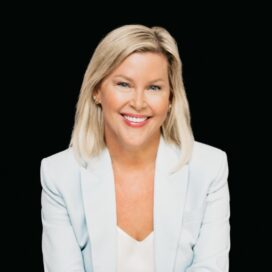
Heather Lang, Chief Marketing & Experience Officer: “The surgeries are obviously what pay the bills, but to attract the new patients, most of our efforts are focused on [orthopedic] urgent care. So that’s our primary message. and I would say the vast majority of our efforts.”
Episode overview
Announcer: Welcome to the Ignite podcast, the only healthcare marketing podcast that digs into the digital strategies and tactics that help you accelerate growth. Each week, Cardinals experts explore innovative ways to build your digital presence and attract more patients. Buckle up for another episode of Ignite.
Alex: All right. What’s up, everybody? This is going to be fun. We had scaling up a few weeks ago. No, it wasn’t a few weeks. It was last week. A lot of last week was talking about aligning marketing and business objectives and getting the C-suite bought in. We have the C-suite on with us today. This is fun. We’re going to hear it from Heather. Heather, welcome to the crazy show of Ignite. What’s up?
Heather Lang: I’m excited to be here. Good to be with you, Alex. Thank you.
Alex: Starting out with lies. We got already two lies, Heather. Anyways, we’re going to have fun. Heather, tell them where you work. What do you do?
Heather: I’m the chief marketing officer for Twin Cities Orthopedics. TCO is a large orthopedic practice based out of the Twin Cities, Minneapolis, St. Paul, Minnesota.
Alex: Variety of stuff. Not just surgery. I feel like not all ortho groups are made the same. It seems that you’ve got urgent care. You do a lot of therapy. Tell them a little bit more about the suite of services and the focus for TCO.
Heather: Yes. We are just shy of about 2,500 employees. We’ve got over 35-plus locations, a huge physical therapy practice within the organization. It’s probably one of the largest in the country of a fully integrated model. If you think about other ortho practices, maybe being on sub-brands or not all on the same pay model or structure, we’re fully integrated. We have one board. We’ve got a pay model that has ancillary services across the whole practice. If you think about our urgent cares and our physical therapy, we have surgery centers, obviously, imaging.
We just brought rheumatology into the practice two years ago. That’s been new. Those are the big things that we’re doing. We’ve got a pretty big sports medicine practice. We’ve got a brand called Training House that is sports performance. That’s really expanded for us in the last few years. We started to put that brand in some of our orthopedic clinics and have the great turf and the high ceilings and the impact wall, and all of those things, so our spaces all look the same, but that performance and sports medicine outreach piece of our business has really grown dramatically too over my time. I’ve been here for 14 years.
Alex: 14 years. You’ve got the whole range from urgent care, initial thing, to surgery, potentially, and then to the PT to keep them going. Where do you prioritize? There’s a lot of people running multiple service lines. Generally, where do you prioritize? The feeder system of urgent care? When you’re thinking about advertising, direct marketing, community involvement, urgent care, to get them in? Is it the PT because it’s a bigger LTV? Is it the surgery because it has the best revenue? How do you focus? Where do you focus?
Heather: The surgeries are obviously what pay the bills, but to attract the new patients, most of our efforts are focused on urgent care. That’s our primary message. I would say the vast majority of our efforts, we, of course, do campaigns and things like that for all of our service lines, whether it’s spine, hand wrist, rheumatology, et cetera. We’re dabbling more in going direct on physical therapy. That will be new for us in this market because we’ve not done a lot of that, but our therapists create that fantastic relationship with patients. You can see a patient within a certain window without having a physician order.
That’s going to be something new that we’re going to put more of our dollars into for next year, but primarily urgent care. Every other patient is a new patient that comes into our urgent cares when we think about it at a high level.
Alex: Yes, that’s the way. Then you get the imaging done, and you’re like, “You need your ACL repair. Bam.” I got imaging done when I tore my ACL, and then no one from that system called me, and I went to another system. That’s crazy. You must think a lot also about automation. I want to talk about more of the advertising and urgent care side, but you must also think about the automation and all that fun stuff, making sure urgent care is constantly nurtured, so that we get the PT or the surgery. Do you have it all connected?
Heather: Yes, I think that’s the differentiator. We like to say the differentiator is this is an independent practice. This concierge-type medicine. We’ve got clinical navigators. We’ve got our sports medicine physicians talking to our PTs or our total joint surgeons, working with the therapists. It’s not just choosing in a dropdown of where you go. It’s really making sure the patients get to the right provider that can work closely with that physician on the whole continuum of care.
Alex: That’s smart. Concierge, is that what you call it?
Heather: Yes, concierge.
Alex: That’s really smart.
Heather: We’re thinking more about that even on– We dabbled in a virtual clinic 10 years ago. It didn’t really take off for us, but what’s the new way of this navigator, concierge-type medicine that consumers want it and they want it now? How do we be there when they need us? That navigator piece happens right now for our sports medicine partners, but how can we expand that to be for the everyday patient?
Alex: I would love to see that because the health systems are bad at it. Sorry, health systems. There’s only six listeners. Probably only one of them is health system, but you’re bad at it. You’re bad at it because you’re so big that there’s not–
Heather: Too big.
Alex: Yes, they’re too big to pay attention to each patient, and the animations aren’t getting a lot, “Hey, man, they tore their ACL. Somebody call them. Get the surgery scheduled.” Crazy, crazy, crazy. I like that. When you’re looking at these experiences because you have so many, you are comparing it not to other healthcare brands because we talked and you said, “I don’t look up to other healthcare brands. It’s not what we’re comparing.” What do you compare against? What are you thinking about experience and access, and all that different stuff?
Heather: We’re looking at things– Is it the restaurant experience or the hotel experience or the local Dick’s Sporting Goods versus Shields in this market? You walk into one, you can absolutely tell the difference in the experience. How do we be that in healthcare? How do we think about what sets us apart? Because we’re in a super competitive market. Retail is probably the best example that I can say we’ll look to of how do we work on training our staff and this whole navigation continuum of care, but how do we step up to technology inside of that experience too?
We’ve got so many disparate systems, and patients are constantly like, “I don’t know where to log in for that, and how do I find that?” That’s one thing the health systems, I think, do well, where some of the more independent practices I think have an opportunity there. That’s a big focus for us is patient tools.
Alex: Patient tools, and then maybe it should be as easy to order a PT visit as it is to order a burger delivery. I know it’s healthcare and all that stuff, but guys, it’s a $50 purchase either way. It can’t be that complicated. It should be that easy. In fact, it should be easier because it’s healthcare. We need people to come in and get well before there is a serious injury. I like that, looking at the retail brands and all that fun, fun stuff. Let’s talk about 2026 because we’re in Q4. It’s November ’25. We’ll release this in ’25, probably in December.
When you’re looking at next year, if you’re handed a bunch more budge, what are you looking at? What are you excited about? Then we’ll start talking business outcomes, or does it start with business outcomes? You’re C-suite, do you start with that? Then here you go.
Heather: I’m sure you hear this from lots of your colleagues and clients of, “You got to focus on the new patient.” We measure our outcomes. We measure our satisfaction. We know patients once they get into TCO are happy. We’ve got 98%, 99% satisfaction. Our sweet spot is the storytelling. We do a lot of that on social. How do we focus more in our digital efforts in the midst of patient privacy and attribution? If I had more money, I’d continue to invest in our digital platforms and how we mix our awareness media with our digital media, and just to think about that attribution piece amidst privacy. I think that’s the piece for us.
Really, in those insights, we’re so quick to move into what we think the solution is. Did we really learn how a patient makes decisions? What are they faced with? What do they really want? This consumer research is a big piece for us, too. We’re doing focus groups and panels and a patient council. I’m actually in a beta test for an AI project called the Jenny Project. It’s using synthetic or AI data to really mimic what that patient might be. Then I can throw in an ad campaign, or I can throw in an idea. I’m like, “Well, what does Jenny think of this?”
It can mimic and model the target demo of, “Is it a spine patient? Is it a total joint patient? Is it a 14-year-old hockey player? Is it a 70-year-old total joint patient?” I’m excited about the innovation in technology for how we can be a bit smarter, how we learn with patients, and how they make decisions.
Alex: You’re in good company because the attribution of demand gen and demand caps are very difficult. The biggest group still, nobody’s figuring it out in healthcare because we have so many restrictions, obviously. It’s very hard. Most people are still last click despite the 37% scaling up, that said they’re multi-touch attribution, but whatever. The Jenny Project, very fun. Is that an agent you created? Is that one of the consumer research agents that’s out there that people will dump in after you’ve put in your persona there? What is that?
Heather: I was invited to be part of a pilot group with a gentleman who this is his project. He started the platform. It’s not fully launched yet, but he’s chosen– I’m representing a healthcare vertical, but it’s others from Winnebago, Foot Locker, Whataburger, and me are all in the cohort together right now just testing it. I’m going to buy an RV, or I’m going to go get a burger, or I’m going to get an ACL done. We’re in the pilot phase, but he wants to do some testing and learning with us to say, “What do you think of the tool?” Then long-term, hopefully, we sign up and use the tool.
Alex: You’ll get something out of it. We’ve done a lot of that stuff where we’re plugging in a persona and seeing how they react to different content, all that stuff. You can always get something out of it. Focus groups with providers and patients, it’s generally more helpful now, but it’s cool. Guys, Heather is not stopping with the innovation. That’s cool. 15 years in, she’s still doing it. I love that consumer research. Not a lot of people say that. They say, “Well, I do more digital advertising for it. It’s like, “Well, yes, but to who? What do they care about?”
Heather: What do they care about?
Alex: What do they care about? Let’s talk about that because I know you’re a big proponent of making sure the channel masters the message, and you said you guys are going to stand out. How does TCO in a crowded market stand out? What tips can we get here? Is it outcomes? “We have the best outcome.” I’ve been told not to answer the question. What is the answer? [crosstalk].
Heather: We took a swing at a campaign. We’re now running it our third year. We were very much in our brand colors and it’s blues, grays, blacks, and “Isn’t this nice, and doesn’t it look great?” We went bold, and it was ready-set TCO. It was bright reds, yellows, very much aspirational photography and imaging. We’re going to take it one step further, and we’re going to go a little bit to the witty humor side. Sneak peek, it’s coming here for our 2026 campaign. That’ll be mainly out of home, but how do we do it in digital and then on social too? Healthcare is safe.
Alex: Boring.
Heather: Yes. We can give it a little bit more life. I know that we can. It’s that idea of you want someone to see your ad or to drive down the road and see the billboard and be like, “That’s cute. That’s funny.” We’re the best at this. What does that mean?
Alex: Everyone’s saying it. “More orthopedists than anyone else. Biggest in the state.” Oh my God, I can’t do it anymore. Heather, you got the perfect name for the industry. Healthcare can be– The point is to connect patients with care. The point is to connect with patients. You can’t connect with patients if you’re not either driving at their heartstrings or resonating with them in a different way. Come on, guys, you can be witty and still useful and get the patients in the door. Oh, come on. I love it.
Heather’s leading the charge. I can’t wait to see these campaigns. TCO’s brand is not the reds and the bolds and all that stuff. It’s blue, and it’s gray, and it’s safe. Guys, feel free to experiment and get a little bit out there. Heather’s trying it, and I bet Heather’s going to say, “Look, rest of TCO, you liked that. It worked, right? What if we did that with the rest of our board? That’s going to be fun.”
Heather: You have to take a little risk.
Alex: Come on, healthcare marketers, we can do it. We can do it. Heather’s doing it. We can take a little risk, and we’ll still land well. I have one more thing I want to ask you. You started with traditional. That’s interesting. That’s good. Roll down to digital. That’s typically how it’s done. When you look at ’26, what’s the best way for marketers– We heard for scaling up, most budgets are flat, but being asked still to grow, and they’re mostly private equity banks. All these MSOs, DSOs, still got to grow.
Where do you start? Are you handed capacity goals? Do you ask for capacity goals from your counterpart at the COO? Where do you start with figuring out next year? Do you map out the whole year? You’re like, “Guys, this is a quarter. I don’t know what happens there.”
Heather: We pitched to our board a month or so ago. How we’re talking about it is our history on our new patient trajectory. We actually had a significant increase in our budget after our pitch this year. I was listening on scaling up, and I’m like, “I feel pretty fortunate that we’re not flat.” We actually had a sizable increase, but I used data to influence our board and to show new patients were not at the clip that we want it to be. How do we really invest in the brand to say we’ve got to get those new patients in the door and starting with TCO?
The value of a new patient, what that patient brings in the door, post-urgent care visit, 60 days, 90 days. How do we look at our marketing mix of the cost to acquire a patient? You have physicians saying, “Well, if I give you X number of dollars, what can you turn that into?” If you can articulate that, that’s very meaningful for them.
Alex: A couple of things to unpack in there. Looking at the value. Orthopedics was very heavily referral-driven from PCPs and amputees, too. The whole thing is changing. Now I think everybody’s waking up and saying, “Well, we have to do direct-to-consumer.” Heather’s leading the charge with saying, “Guys, the reputation’s awesome,” which helps. It’s step one. Otherwise, you can’t focus on new patients because you’re going to get so much leakage. It won’t matter. The reputation is good. That matters. Great providers. Retain them. Good front office. That matters. Google reviews to match.
Now Heather can focus on the net-new stuff. She said, “This is the lifetime value when we get them into urgent care.” Guys, go model that stuff. Go into your data and say LTV because every time I got on a discovery call, no one knows their LTVs of different patients and service lines, and say, “Guys, then how do you know where to start?” The surgery’s where the money’s at, but I bet we don’t get the surgeries if we don’t do urgent care. Heather went into data and said, “Hey, listen, if you give me more money–“
That means Heather also looked at the scalable, how much they could scale in different traditional media and digital media, I assume, and said, “Someone said we could spend $10,000 more efficiently in each of them.”
Heather: Right. Absolutely.
Alex: Heather, be verbose because I want marketing directors to get the budget like you did.
Heather: Physicians are incredibly smart, and we’ve got a very engaged board, and they want to see those metrics and how are you going to take $1 and turn it into $1,000, and how do you measure it? If you don’t have a strategy around that, and you don’t understand how your patients make decisions. We had a goal of our direct access. 76% of our patients come to us directly.
Alex: That’s probably doubled in two years, I bet.
Heather: Yes, probably. It’s been high, but I think 10 years ago it was probably in the 20s. It’s significant.
Alex: Y’all have done a great job. Sabina is awesome at her job, too. She’s very sharp.
Heather: She’s awesome. Shout-out to Sabina.
Alex: She lies low. She doesn’t sleep. She works 20 hours a day, she tells me, and I believe it. All right, guys, go check out TCO. Wait for these campaigns. They’re going to be in Q1. It’s going to be awesome. Heather is very generous. Hit her up on LinkedIn. If you have questions, if you’re in orthopedics, you would consider this high acuity and all that stuff, but she’s still running a retail healthcare playbook, and it’s working. Hit her up. She has tons of service lines, very generous, very cool. Heather, thank you for the insights.
Heather: Thanks, Alex. It’s been a lot of fun.
Announcer: Thanks for listening to this episode of Ignite. Interested in keeping up with the latest trends in healthcare marketing? Subscribe to our podcast and leave a rating and review. For more healthcare marketing tips, visit our blog at cardinaldigitalmarketing.com.
Healthcare Marketing Insights At Your Fingertips
Listen and subscribe to Ignite wherever you get your podcasts.