


Episode Highlights:
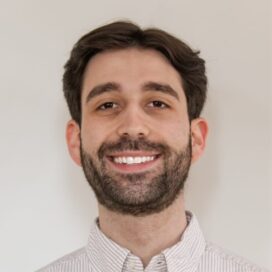
Brandon Weinberg, Senior Brand Strategist at Rothman Orthopaedics: “People want to see themselves in all these testimonials because they are in need of similar care, similar services. They want to see that the same people within their community are receiving that same level of care, that we can connect to our sports partnerships, which is a great way for us to stand out.”
Episode overview
What if orthopedic growth starts long before a patient needs an appointment?
On this episode of Ignite, Ashley Petrochenko, VP of Brand Marketing at Cardinal, sits down with Brandon Weinberg, Senior Brand Strategist at Rothman Orthopaedics, to unpack how Rothman builds trust before the moment of need. Drawing on his background in sports marketing with the Philadelphia Phillies and Milwaukee Brewers, Brandon shares how Rothman uses community partnerships, patient stories, educational content, and digital access to stay relevant across the patient journey, from an urgent injury to elective surgery.
In this episode, you’ll learn:
- How sports partnerships create trust before patients need care
- How Rothman balances urgent and considered patient journeys
- Why authentic patient stories can strengthen orthopedic brand preference
- How marketing teams can grow demand while staying aligned with physician capacity
If you want to rethink how your healthcare brand builds patient relationships before the moment of need, this episode is worth a listen.
Announcer: Welcome to the Ignite Podcast, the only healthcare marketing podcast that digs into the digital strategies and tactics that help you accelerate growth. Each week, Cardinal’s experts explore innovative ways to build your digital presence and attract more patients. Buckle up for another episode of Ignite.
Ashley Petrochenko: Hey, everybody. Welcome back to another episode of the Ignite Healthcare Marketing Podcast. Ashley here, and joining me today is a marketer from the orthopedic space. We’ve had a lot of dental episodes recently, so I’m really excited to dig into something new, which has some similarities which we’re going to dig into. Without further ado, let’s welcome Brandon Weinberg, the senior brand strategist at Rothman Orthopedics, to Ignite. Welcome.
Brandon Weinberg: Thanks, Ashley. Pleasure being here. Looking forward to it.
Ashley: Before we get into it, maybe you could share a little bit about your background, the work that you do at Rothman, and who Rothman is, so the listeners have some context.
Brandon: As you mentioned, I’m the senior brand strategist here at Rothman. Been here for about four years now. I have my hand in a lot of different areas of the marketing department. I assist in managing Rothman’s digital and traditional advertising within our core market of Pennsylvania and New Jersey, so SEM, SEO, AEO, digital display, OTT, podcast, TV, print, radio, out-of-home. Anything under that advertising sun, I really have my hand in there from that overall campaign and brand strategy standpoint, as well as the lead generation tracking and reporting.
Ashley: Are in your wheelhouse.
Brandon: I would say so, absolutely. The only areas that are not specifically under me are social and email, which I’m excited to get into a little bit later. Our senior social and email specialist does a tremendous job of weaving all of our mediums together.
Ashley: I was creeping on your LinkedIn profile. You actually have some background in the sports industry too, which I thought was interesting, at the Milwaukee Brewers and Philadelphia Phillies. How did that experience shape how you moved into orthopedics? I feel like there’s a connection.
Brandon: It is not a linear path, to say the least. Again, my background is primarily in sports, particularly in digital marketing, social media, email, and some website management. Really just a lot of transferable skill sets that can be taken into really any marketing realm. I’m very grateful to be at an organization that has a lot of great sports partnerships, whether it is professional, collegiate, youth sports. Really being able to tie in that past experience in sports marketing has been a joy.
Being able to take these transferable skill sets into the healthcare space while also adapting to the healthcare space and learning more about it as a whole has been a really cool opportunity, but very different path to get from sports to healthcare.
Ashley: I like that there is that relationship with the partnerships. I think that’s something we can talk about in a bit, a different way to reach and build that trust with patients. We’ll get into that. Before we do that, I think with sports, you have sports injuries. We’re going to talk a little bit about that emergency, that acute need for orthopedics versus more considered orthopedic services. When we’re thinking about those two different pathways to receive care, how does that show up in practice for you? Are you talking about how you split up the campaign structure, content messaging, all of that? What does that look like at Rothman?
Brandon: We believe in a robust search presence, whether that’s SEM, SEO, AEO, GEO, as that is primarily where the patient journey begins. Whether it is, again, someone looking for immediate care from an acute injury or someone looking to schedule a consultation for something like a hip or knee replacement.
Once we gather that patient onto our website, we provide clear signals to the users looking for immediate care, including a recently implemented Get Care Today page button located in a prime position of our navigation bar. Again, quick and easy access for those trying to get information on our urgent cares, our walk-in center locations, as well as our RothmanNow service, which is a free, virtual, 24/7/365 platform that provides access to orthopedic specialists, again, that can provide that immediate response to any urgent orthopedic questions.
Ashley: You have the people who are making this more considered time; they’re building it into these urgent schedules, but that urgent care, is that layered on top of an existing contact center, online scheduling? How does that infrastructure look like for people who are trying to build this themselves?
Brandon: In terms of the urgent care and walk-in centers, primarily outside of a few instances where referrals are needed, they are exactly how they sound. People do not need appointments; they can just go in. Again, for those that are looking to schedule a consultation, we do offer a bevy of options to make sure that those opportunities are being handled properly, starting with the online self-scheduling appointment access that we provide for both new patients and returning patients, as well as, again, that centralized call center that you mentioned that can triage anyone that is calling in and is unsure of which specialist to see, where to see, when to see.
Really can provide that patient exactly where they need to go for that non-immediate care and that more considered care.
Ashley: When someone has a broken bone, and they’re in agony, they are not doing a lot of research. They want those convenient signals like you have built into the website, like, “This is where you go right now.” How do you think about the credibility aspect when they are trying to make those urgent decisions? How does that differ, and how do they work a little bit differently maybe for acute versus considered? Is there any nuance in that way?
Brandon: Yes, absolutely. From a credibility-building content standpoint, we find that it tends to be more effective for the considered patient versus the immediate. Now, with that in mind, with the introduction of RothmanNow into our communities, we have had the unique ability to really start incorporating that messaging into our local partnerships, particularly youth sport organizations, which provides the coaches, the staff, the parent, access to the service as a downloadable app and reinforcing that messaging throughout the year, which allows us to be front of mind and readily available for any immediate orthopedic guidance, where to turn for any of these acute injuries.
It’s really just trying to find a way to build in that credibility into that acute standpoint in a lot of these partnerships. Really just trying to expand that messaging across our area.
Ashley: That’s cool. Tell me a little bit more about this app. This is something you’re working with partners in building it out preventatively, making sure that parents just have that button to call or go whenever they need something?
Brandon: Yes. We have partnered with a company called HURT!, who has built this service with us. Essentially, when we have someone register through the program, they get instant access, again, 24/7/365, to an orthopedic specialist. Say their child gets hurt during a youth soccer game, they see some black-and-blue marks on their ankle, they send a picture to the orthopedic specialist. The orthopedic specialist does a quick review. They say, “Based on what I see, I’d recommend you go to an ER, or go to an urgent care, or the RICE method could just be the best solution here.
Again, we have that ability to transfer, again, to that centralized call center to ensure that if a consultation is needed for that, they are, again, quickly transferred over and make sure that triage process is as seamless as possible.
Ashley: If parents are busy, mom is busy, they need convenience, so you’re tackling it from right in their phone, right there, so they have a direct pathway to get an answer. Do you do that beyond pediatrics and beyond kids and sports? Is that available for other types of service clients or other types of personas that you’re targeting?
Brandon: It’s interesting because with our personas, we have such a wide audience, such a large range of demographics we can hit. We’ll treat, essentially, as young as 10 years old and we’ll treat anyone up to 100 years of age. Really, we have such a large group of patients that we can ultimately access. For, say, some of the older patients that might be dealing with more arthritic-related issues or joint-related issues, but are also weekend warriors, we find that this app is a great way to target them.
Whether that is with a local recreation center or even a local entertainment group, whether it’s a theater program, we find a lot of different ways to reach a lot of different active audiences.
Ashley: That’s cool. There are a lot of organizations that are active, and people get hurt, and they’re like, “Is this serious? Do I need to do this?” I’m in a curling club. Someone fell on the ice and is like, “Do we go to the ER? Is it okay?” That’s really cool. Thinking about personas, we’re going to go a little bit deeper into personas. You have the convenience needs of some of these audiences, but then you also have just the long-term brand building so that when someone is suffering for years maybe of pain, how do you build that authority and awareness of those audiences? How do you balance the two?
Brandon: When it comes to balancing our long-term brand awareness and measurable patient growth, I would say our email marketing and our social media presence may be the two mediums that best represent how we approach that balance. As mentioned, our social and email specialist has done a great job over the last several years of really taking these mediums and taking them to the next level. We have found immense success when it comes to focusing on providing relevant, interesting, and wide-ranging content to our email database, which at this point is at the six figures.
We’re really proud of that growth. That content being Rothman news stories, physician-written blogs, physician spotlight videos, educational webinar opportunities, or even sweepstakes opportunities with our partners. Again, all of which have resulted in record new returning-patient appointment leads from specifically our email efforts.
Alongside of that, that same content provided to our email subscribers, typically repurposed for our social media channels, which ultimately allows us to reach new audiences through these organic and paid efforts, as well as utilizing Lombard partnership marketing efforts and assets to promote these services, to promote our physicians as trusted parts of these communities.
Ashley: That showing up continually over time with helpful information is so critical to building trust. We talked about these weekend warriors. They are active adults. They are participating in clubs, doing whatever for years and years. Then they’re aging into that maybe joint replacement candidate spectrum. How do you think about that journey and that relationship? Are you watching that relationship over the span of a decade, or do you think of them as two separate acquisition paths?
Brandon: With our active email and social presence, we find that our relationships rarely end with our patients, which we love, as we have seen in a lot of our returning patient scheduling leads that we’ve been tracking and generating these last several years. Now, specifically, we have a patient ambassador program in which we work with our video agency to film patients who want to share their successful Rothman recovery with their communities to encourage others to start their own recovery journey with Rothman.
Specifically within that, we had an ambassador within the last year who we worked with that had 12 different surgeries with Rothman to address a series– [crosstalk] He’s a frequent flyer, if you will. To address a series of injuries really just across his body that occurred over several decades. Due to the positive experience he had with our staff, that patient came back time and time again to address the next issue that arose and genuinely could not wait to tell his story.
It was a great opportunity to showcase that you may have had the surgery and you’ve recovered, and that’s wonderful. Unfortunately, you might get injured in other ways, and we’d love to be there for you if you need that service, if you need that care, which is why we do have that long-term relationship building to really build alongside a lot of our growth channels across the way.
Ashley: To make the decision to electively go and do a very invasive surgery is scary. Hearing from people that are like you and they can see themselves in the testimonial and the patient story, that is really powerful to getting people to feel like they can trust you. Thinking about that trust, the trust doesn’t always have to be formed with the patient. I always like to bring my own life into these conversations sometimes. I’m an adult daughter. I help my parents make healthcare choices, help them find surgeons of backs, like a neurosurgeon right now.
How do you think about the decision-making unit and reaching people and building that relationship with each one of them? Because it’s not always the actual patient maybe making the choice or doing that initial research step?
Brandon: Very much like to tie that back to how we utilize our youth support partnerships, especially those that are under 18, those that are unable to actually make their own healthcare decisions. Getting in front of the parents, getting in front of the coaches, getting in front of the staff, those are the three primary ways that we can get to the decision-maker for someone that cannot make their own healthcare decisions.
For example, having a youth support partnership, having patient education content on preventing youth support injuries and what to do, recovering from a concussion, things of that nature. Providing that educational content through the parents, to the coaches, to the staff, keeps us front of mind and provides them any type of access, whether it is through that RothmanNow or through our specialized Rothman Partner Fast Scheduler program. We really want to make sure that even if you are not the one that needs that care, you are aware of how to reach care for those that need it.
Ashley: There’s a lot of people involved in healthcare journeys, especially very considered ones like this. I think for listeners, there’s aspirations. People want to do this. They want to have this unique custom message and journey for every single possible scenario out there because it’s important. Then it also just breaks down, “How do I actually do this and scale it and make it happen?” How have you balanced that at Rothman to make it come to life with whatever budget and staffing restraints and in your reality?
Brandon: When it comes to drawing a line between performance and additive costs, it really depends on the campaign and our goals tied to them. For us, our target audience really services nearly all ages, 10 to 100. On top of that, we have 10 subspecialties, 8 ancillary services, and over 30 locations. Yes, combinations for segmenting, rather endless for us.
Now, we try to ensure that we are in constant communication with our media agency on both our campaign strategies and our spend to ensure we are hitting our ROAS goals. Alongside of that, we find it’s imperative that we, again, are in constant communication with our analytics team just to ensure that we have a broad picture, at least from that regional perspective of where things stand from a volume standpoint, and then really drilling down where some of that additional volume may be needed and how to address that.
Ashley: We’ve been talking a lot about more of the direct-to-consumer trust building and the relationship and reaching the parents or the aging adult, but I probably should have asked this first. Where does Rothman sit on the referral versus direct-to-consumer spectrum play? Where are you at now and how has that shifted?
Brandon: Our marketing team is comprised of a branding side, which is what I sit on, that traditional digital advertising and partnership efforts. Other side of our department consists of a position relations team. Position relations team is dedicated to building and maintaining relationships with the referring physicians within our area, as well as making sure that our own physicians are receiving the proper support they need from our department regarding promotion of their own practice.
In terms of how we both work together to promote our physicians, we’re able to do that through both in-person and digital touchpoints, which is great. For example, at a local race that we sponsor and receive a tabling opportunity, not only will we send out our marketing representatives, we’ll work together to find a local Rothman physician who is interested and available in attending to, say, lead stretches ahead of the run, participate in an informal ask-the-doc opportunity, where racers, runners, participants will ask non-urgent orthopedic questions and our physicians are able to provide just some brief informal information.
Then ultimately, if they need to schedule an appointment, we have the ability to do so right on site, or we can give them our contact information to make that at a later time. Ultimately, our two sides are constantly working together to see how we can provide these opportunities within our community, within our digital touchpoints to our physicians to connect the two.
Ashley: I love that it’s not siloed. You really are working together and creating those moments, especially those community events and building that trust in person. They can really actually meet the brand and meet the physicians, thinking about that physician. If you can get someone to show up that day, but that speaks to every physician is different, every schedule is different, and your marketing and your digital advertising campaigns and budgets all needs to be aligned with that constraint.
How do you assess that availability and align that with your marketing budgets? Is that something that you consider, factor in? How are you working with your operations team?
Brandon: Our paid campaigns are typically focused more on the entire subspecialty as opposed to, say, a singular physician or location. Now, that’s not to say that we don’t use specific physicians, specific locations as part of our marketing campaigns, but in terms of more of those broader paid campaigns, it is more of that subspecialty level as opposed to that specific physician or location.
Now, when a specific physician or location is in need of additional volume, we first look at free and organic ways to promote them: blogs, webinars, speaking opportunities with partners in our physician relations team. If those efforts don’t exactly provide the expected results, we try to keep additional budget reserves throughout the year for those moments specifically. If those do arise and we do need to utilize that additional budget, we try to analyze where best to utilize those dollars, whether that is a paid search campaign, paid social, out-of-home efforts, or digital display opportunities that really can, again, speak to that local 0ffice or that physician in particular.
Ashley: The campaigns are focused on the service line, but often there are superstar surgeons that everyone wants. How do you think about the phones are calling, everyone wants Dr. Tom or whatever? Does that happen? Is that a reality where you have to think, “But how do we actually shift this incoming lead volume to availability?” Is that a scenario that you can speak to?
Brandon: Yes, there has been times where people are calling in for a Dr. Tom that they have been seeing everywhere that they might have just came across on a LinkedIn video or a TR opportunity as a local media outlet. There are opportunities where our operations team does have to limit some capacity for them. I will say that doesn’t affect us too much. Now, if we did have a lot of campaigns or opportunities in the works with that specific physician, we’ll probably pump the brakes on them.
We’ll say, “Hey, we know you had a series of blogs you were working on. Maybe we hold that until next year or a rainy day where it might be more beneficial to release it when we do have more capacity to address this volume.”
Ashley: Dr. Tom doesn’t need it, guys. We can wait a little bit. We’re all patients here. I’m thinking I just had the recent surgery. I waited seven months for my surgeon because he was that much demand. That was a little wait list. Sometimes people are willing to do that. How do you bring the rest of the population and people to another doctor, so it’s not all funneling to one? I’m always just curious how people approach this challenge because there are superstars and some people want to wait, and some people just need care right now.
Brandon: Absolutely. I think our call center does a tremendous job of answering the phone and best triaging patients to somebody that is just as skilled, just as much of an expert as the Dr. Tom, but has some more availability in their schedule. Now, unfortunately, that might involve an opportunity where the patient has to just go to a different location. It also does allow them to be seen in a much earlier timeframe. Really, it’s in that patient’s hands to make that cost-benefit analysis and say, “Look, I’m totally willing to wait for Dr. Tom, but I’m glad to hear that Dr. Rachel is also just as qualified and she is available. Let me take that into consideration and see if we can get something on the books with her.”
Ashley: Sometimes that’s more important. It’s great to be able, like you said, to triage and have that great relationship, and contact center can help make those calls. Maybe leaning into a little bit of your background into sports and other broadcasting space, how do you think about standing out in orthopedics? A lot of times it’s like, “Best-in-class, all the awards, I’m amazing, convenience.” How do you go beyond that and build a brand in this space?
Brandon: Definitely going back to really focusing on hearing the patient and allowing the patient to share their success stories. People want to see themselves in all these testimonials because they are in need of similar care, similar services. They want to see that the same people within their community are receiving that same level of care that we can connect to our sports partnerships, which is a great way for us to stand out. It’s a way for us to say, “We take care of the pros. We take care of the best in college, the best youth athletes in high school, but we take care of the weekend warriors.
“We take care of the Little League baseball players as well. We provide the same care, same level of attention, same level of detail to everyone across that spectrum.” Again, really that authenticity and expressing that every patient is the same level of priority to us is one way that we really like to showcase and stand out from that documentary and traditional advertising that we also will use, but don’t try to lean on it too much. One specific area that I do love to highlight that is outside of the standard, most locations, best of the best, accolade, X, Y, and Z, is our subspecialty care.
With a lot of orthopedic companies, not that there’s anything wrong with that, there’s a lot of general orthopedists that essentially focus on a primary portion of the practice. We’ll occasionally have some specialists built in. For us, we are focused across the board. 10 subspecialties right now, whether that’s sports medicine, hip, knee, foot and ankle, physical medicine and rehabilitation, shoulder, elbow, orthopedic oncology. We want to make sure that you are being taken care of by exactly who needs to take care of you with the exact expertise and knowledge that will make you feel comfortable coming to Rothman and choosing us to make this big life-changing decision.
Ashley: Best when it’s general isn’t as maybe meaningful, but when it’s truly like, “I do this surgery every day hundreds of times, I truly am the best in this subspecialty,” that is a message that is more narrow, it is exactly for that audience, and that resonates. We’re going to wrap up in just a minute, but I had one question too, going back to the sports partnerships, because I think that is something that not a lot of other healthcare verticals maybe do as much explore.
I think it’s sometimes a little bit more obvious in orthopedics, PT, that space. Is there a campaign that you did or a partnership that you did that really stood out that you think you’d like to share with the listeners?
Brandon: We have been the official orthopedic partners and team physicians for the Philadelphia Phillies for over three decades. It’s been a great partnership. We love working with them as well as working with the Phillie Phanatic. For those that don’t know, he is one of the most beloved, if not the most beloved, mascot in sports. At the end of last year, we had the opportunity to film a commercial with them that I had a chance to write the script for and help produce with our video agency, which was able to tie in our partnership with the Phillies and showcase our care as providers of the team.
Concept essentially being: Phillie Phanatic might be the best mascot in sports, but he’s not necessarily the person you want taking care of your orthopedic needs. I think that’s more than fair, and that’s where we step in. The ability to utilize our sports partnerships to reinforce our expertise while doing it with beloved community members and partners, truly such a joy, with me specifically having that sports background space. Just a great mix of my old background and my new responsibilities. The blending of the two worlds, absolutely.
Ashley: Building that familiarity with people through a mascot can be really powerful. By the time this airs, people might be seeing a Cardinal mascot come to life. Don’t be surprised.
Brandon: I would be happy to help produce that commercial. Let me know.
Ashley: Totally awesome. I love this conversation. To round it out, we’re going to do somewhat quick answers. Sometimes we talk too much, so we’ll try to make it quick, though. We’re going to do some rapid fires. If there is outside of healthcare one brand that you just love and are inspired by, that you go to for inspiration, what is it?
Brandon: Oh, man, this is not going to be a good answer. I don’t have a singular brand. Again, my background and experience in the sports world always has me checking out all the different leads, all the different teams, all the different brands in that sector. I find that space to be so creative, so vibrant. They are always willing to take risks. I think that is an extremely aspect of any marketing department. I’m always constantly checking out all the sports industry-related social, email, display, advertising that they are just putting out in the market.
Ashley: How about if there is one trend that you think is just getting too much attention, something that’s overhyped in marketing and you’re just tired of, what would it be?
Brandon: Generative AI. I’m not a huge fan of it. I will say from an overall AI standpoint, we do use a lot of tools that help us streamline a lot of our processes. There are a lot of great AI tools. I think from the generative space, there are a lot of companies that I feel like are just really diving in and not exactly paying fine-tuned attention to the content that is being produced from the generative AI standpoint.
I feel like, just from a personal standpoint, that screams that you as a company, you as a brand, aren’t putting the full attention into these campaigns that your customers, your patients deserve. That’s what I would say is one little overhyped channel right now.
Ashley: I think you would not be alone, especially in the healthcare space from that standpoint too. Final question. If you had to think about one marketing opinion that you– A hill that you will die on, do you have one?
Brandon: Don’t be afraid to fail. There are a million and one different ways that you can succeed. There’s a million different ways that you can fail, but you will never know how you succeed until you try. We have 150-plus community partners on an annual basis. A lot of them are great. We come up with some fantastic opportunities to work together and expand these partnerships. There are times where we’re a little overambitious with some of these opportunities, and we don’t hit the mark. Ultimately, we need to keep trying. We need to keep innovating.
Marketing is a very fast-changing landscape, especially in today’s world. Ultimately, I always recommend trying everything you can, putting that research into it first. Once you have an idea fully fleshed out and you’re ready to go to market, don’t be afraid if it might not hit exactly when it’s launched.
Ashley: Don’t be afraid to try new things. I think that’s what makes marketing fun. It’s constantly changing. There’s always new things to try. Don’t be afraid. Try those new partnerships. Try new messaging. See what hits and go from there. Brandon, thank you so much for this conversation. Loved having you on Ignite. If listeners want to connect with you, where can they find you?
Brandon: Thanks, Ashley. It was great to be here. You can find me on LinkedIn or through my website, brandonsweinberg.com.
Ashley: Great. Thank you so much. We’ll be back next week with another episode of Ignite. Thanks.
Brandon: Thanks, Ashley.
Announcer: Thanks for listening to this episode of Ignite. Interested in keeping up with the latest trends in healthcare marketing? Subscribe to our podcast and leave a rating and review. For more healthcare marketing tips, visit our blog at cardinaldigitalmarketing.com.
Healthcare Marketing Insights At Your Fingertips
Listen and subscribe to Ignite wherever you get your podcasts.