



Google’s shift toward AI-first advertising, combined with a strict privacy environment and rapidly changing patient expectations, has created a new era of paid search in healthcare. Campaigns no longer succeed because of keyword lists, manual bid adjustments, or tactical optimizations. They succeed because the underlying data—the signals, structure, and patient context—gives Google’s models enough clarity to decide who is ready for care.
Table of Contents
- 1. First-party data becomes a growth engine
- 2. AI reshapes bidding
- 3. Faster Google updates raise the operational bar
- 4. Testing maturity becomes a competitive advantage
- 5. PMax becomes foundational
- 6. Attribution shifts closer to real patient value
- 7. Conversion signal quality determins PPC performance
- The bottom line
Across enterprise healthcare organizations, DSOs, behavioral health networks, multispecialty groups, and health systems, we’re seeing the same evolution play out. PPC has become a system defined by the quality of your inputs, the maturity of your measurement, and your ability to align media with real operational capacity.
Here are the seven trends shaping healthcare PPC in 2026.
1. First-party data becomes a growth engine
First-party data is now the backbone of audience modeling, remarketing, and downstream measurement. But in healthcare, collecting and activating that data requires more care—technically and ethically—than in any other vertical.
Patients will share information when it helps them move forward in their care journey. Healthcare risk assessment quizzes, screeners, condition explainers, scheduling experiences, and treatment guides continue to be some of the strongest sources of high-intent first-party signals. But once collected, this data must flow through HIPAA-compliant pathways. That means:
- Using server-side tracking instead of browser-based pixels
- Anonymizing or hashing identifiers before activation
- Routing events through HIPAA-compliant CDPs or privacy layers
- Limiting access so only permitted systems and people can touch PHI-adjacent data
The shift isn’t simply “collect more first-party data.” You must collect only what is appropriate, secure it correctly, and feed Google clean, privacy-safe signals. When handled well, these signals give Google the clarity it needs to model intent accurately—especially as audience visibility becomes more constrained.
2. AI reshapes bidding
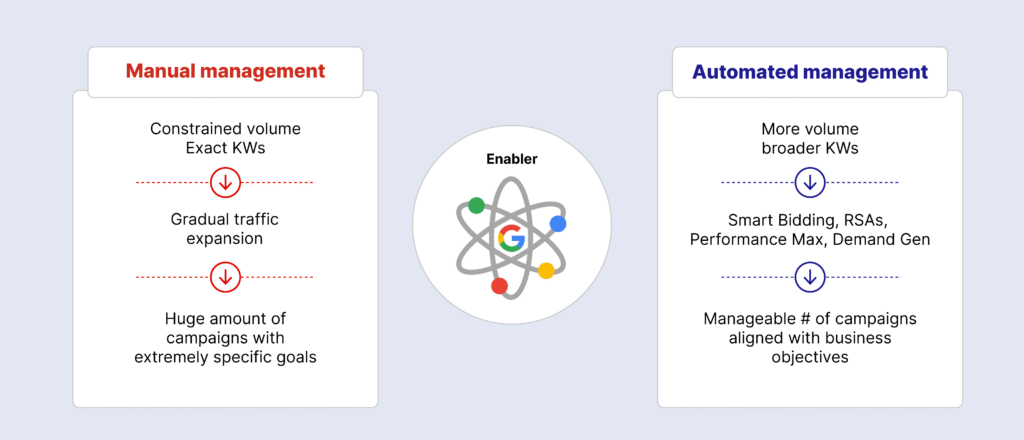
Healthcare marketers have spent years building keyword structures designed to anticipate every possible variation of patient intent. In 2026, that approach no longer aligns with how Google evaluates searches. With AI Max for Search and deeper semantic understanding across the platform, intent modeling moves further away from syntax and toward behavioral signals.
As Evan Ilgenfritz, VP of Paid Media at Cardinal Digital Marketing, explains:
“When we look at Google now, it’s less about this very granular roster of hyper-specific keywords and tons of little details. It’s more about sculpting the theme of what the user is looking for. It’s intent and bringing in additional signals.”
AI bidding can only perform at that level when it receives the right data. If a campaign is optimized to low-quality interactions, such as shallow form fills, unqualified calls, or top-funnel inquiries, Google assumes those are valuable and aggressively pursues more of them. This results in an influx of poor, unqualified leads. But when campaigns use qualified, well-structured, downstream signals, AI becomes significantly better at identifying the patients who match that profile.
Healthcare marketers who embrace this shift and treat bidding strategies as model-training exercises, rather than mechanical levers, gain an immediate advantage in cost efficiency and conversion quality.
3. Faster Google updates raise the operational bar
Google’s move to monthly API updates brings more innovation but also greater instability. For healthcare organizations with complex stacks, each update creates opportunities for integrations to break. Call tracking systems, schedulers, CRMs, CDPs, analytics layers, and server-side tagging setups must now be monitored and validated far more frequently.
Teams that keep pace are adopting a more disciplined operational cadence:
- Monthly QA and regression testing
- Documentation of every conversion pathway
- Failover plans for when primary signals break
- Close coordination between marketing, analytics, and IT
This isn’t glamorous work, but it’s foundational. AI-driven campaigns rely on consistent, high-quality data. Any disruption in your conversion flows—even small ones—creates noise that the algorithm cannot interpret. Operational maturity is no longer optional; it’s a performance requirement.
4. Testing maturity becomes a competitive advantage
With Google releasing new capabilities every month, testing has become a continuous discipline rather than a quarterly project. The organizations pulling ahead in 2026 are running structured, long-horizon experiments that isolate variables, allow full learning cycles, and build confidence in each shift before rolling it out at scale.
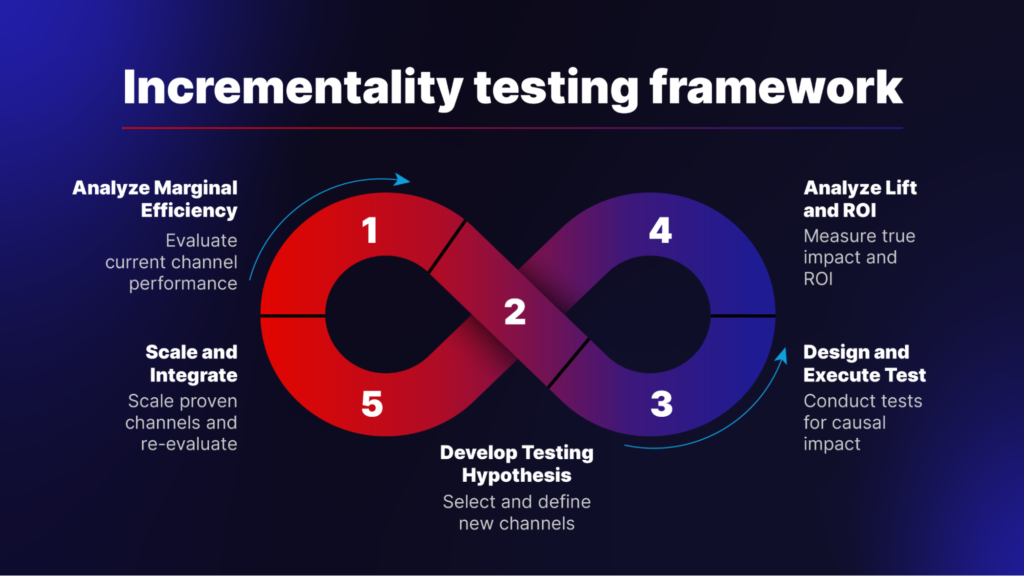
This includes testing:
- Conversion goal configurations
- Value-based bidding ranges
- Broad match versus AI Max
- Asset group variations inside PMax
- Audience-driven creative combinations
- Offline conversion passbacks
- Cross-channel sequencing and lift
The common thread across these programs is discipline—not rapid tinkering. Tests run long enough to stabilize. Results are compared against clean control groups. Winning strategies are implemented methodically, not impulsively. In the AI era, thoughtful experimentation becomes the only reliable path to better performance.
5. PMax becomes foundational
Performance Max has evolved into a full-funnel engine, blending search, display, YouTube, discovery, and even CTV inventory into a single system. For healthcare marketers, the promise of PMax comes down to two things: the quality of your inputs and the clarity of your patient goals.
As Ruchi Patel, Group Media Director at Cardinal, notes:
“Google knows best who to go after if we tell them exactly what we are looking for. If I have the best conversion signals in place, Performance Max can become a beautiful product that complements our search strategy.”
Two things enable that outcome:
- Asset quality that reflects real patient needs and clinical nuance
- Conversion signals that teach Google what a “good” patient looks like
PMax is no longer something to dabble in. It requires a thoughtful structure—separating service lines, aligning assets to patient questions, and giving the algorithm enough depth to make intelligent decisions across surfaces. When those elements are in place, PMax doesn’t replace search; it strengthens it.
In this Scaling Up session, Cardinal’s paid media experts unpack how AI bidding, PMax, and Search evolution affect healthcare.
6. Attribution shifts closer to real patient value
Healthcare organizations are increasingly recognizing that traditional PPC metrics obscure what really matters. A lead is not a patient. A booking is not a kept appointment. A kept appointment is not necessarily revenue. And none of those metrics consistently predict long-term treatment value.
Google’s attribution models now better support offline actions, extended decision windows, and patient-level cohorts. That evolution allows healthcare marketers to align media investment more closely with real care milestones. The strongest programs in 2026 are tying paid search and PMax performance to:
- Kept appointments
- Treatment initiation and completion
- Service-line-specific value
This is where attribution becomes meaningful. Not perfect, but directionally accurate enough to understand what campaigns are doing for the business—not just what they’re doing inside Google Ads.
7. Conversion signal quality determins PPC performance
Across every client, specialty, and campaign structure, one principle has emerged above all others: conversion signal quality determines PPC performance more than anything else.
If Google receives shallow or misleading signals, it learns the wrong behavior. If it receives accurate, well-structured, downstream signals, it becomes a powerful growth engine.

Rich Briddock, Chief Strategy Officer at Cardinal Digital Marketing, summarized it clearly:
“If you’re using online conversion actions, you are bronze or you are silver. If you want to be gold, you need offline conversion actions. It’s offline conversion actions that Google is saying we have to use. So it’s focusing on signals like kept appointments.”
Signals like kept appointments, new-versus-existing patient status, accurate call dispositions, and service-line segmentation give Google a sophisticated picture of what your best patients look like. When paired with value-based bidding, these signals allow the algorithm to determine which users are more likely to convert into meaningful encounters.
The healthcare organizations driving the strongest results in 2026 are the ones investing in:
- HIPAA-compliant offline passbacks
- Differentiated conversion values by service line
- New-patient tracking that’s clean and consistent
- Online scheduler instrumentation that reflects true demand
- Call intelligence tools that separate clinical inquiries from real leads
Signal integrity has become a competitive moat. When the inputs are strong, every channel becomes easier to optimize. When the inputs are weak, nothing works the way it should.
The bottom line
Healthcare PPC in 2026 is defined by maturity—data maturity, operational maturity, and measurement maturity. Google’s AI is more powerful than ever, but only when advertisers provide the clarity it needs to make good decisions.
Organizations that develop clean, privacy-safe data flows, adopt a strong signal strategy, test deliberately, and align media with actual capacity will see the most efficient patient growth. Those who treat PPC like a series of tactical optimizations will fall behind quickly.
